
← Latest news 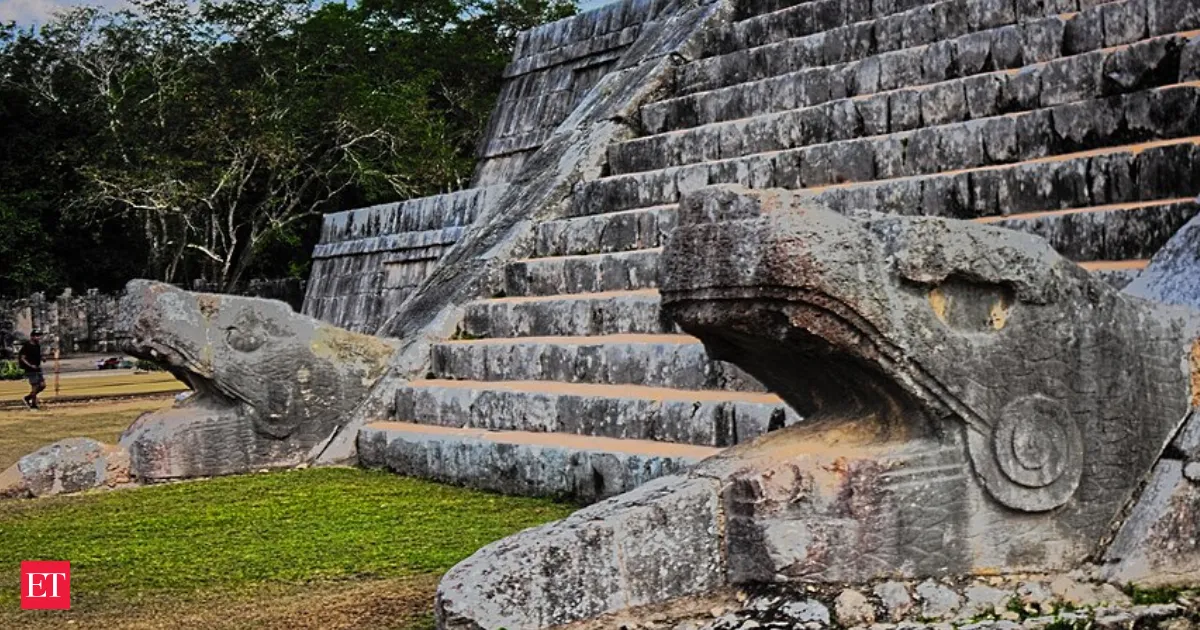
El Castillo mystery deepens as geophysics reveals a hidden cenote beneath Chichen Itza pyramid
International
Published on 15 May 2026
Non invasive scans found a cenote under the pyramid
El Castillo at Chichén Itzá has long captivated visitors with mathematical precision and the equinox serpent shadow. But a 2018 Scientific Reports study used non-invasive electrical-resistance geophysics to map what sits below. Researchers detected a large karst cavity resembling a cenote, implying the Maya temple was built over a natural sinkhole in limestone terrain. No excavation followed, yet the finding is reshaping interpretations of how El Castillo’s underground setting may have influenced its construction and symbolism.
- A 2018 Scientific Reports study used non-invasive geophysical imaging
- Electrical resistance methods detected a karst cavity under El Castillo
- The anomaly resembles a cenote, or natural sinkhole with groundwater
- Earlier work suggests multiple construction layers rather than one final structure
- No excavation was carried out, so conclusions rely on subsurface measurements
- Cenotes in the Yucatán are tied to water and deep Maya cosmology
Read the full story at The Economic Times
This summarization was done by Beige for a story published on  The Economic Times