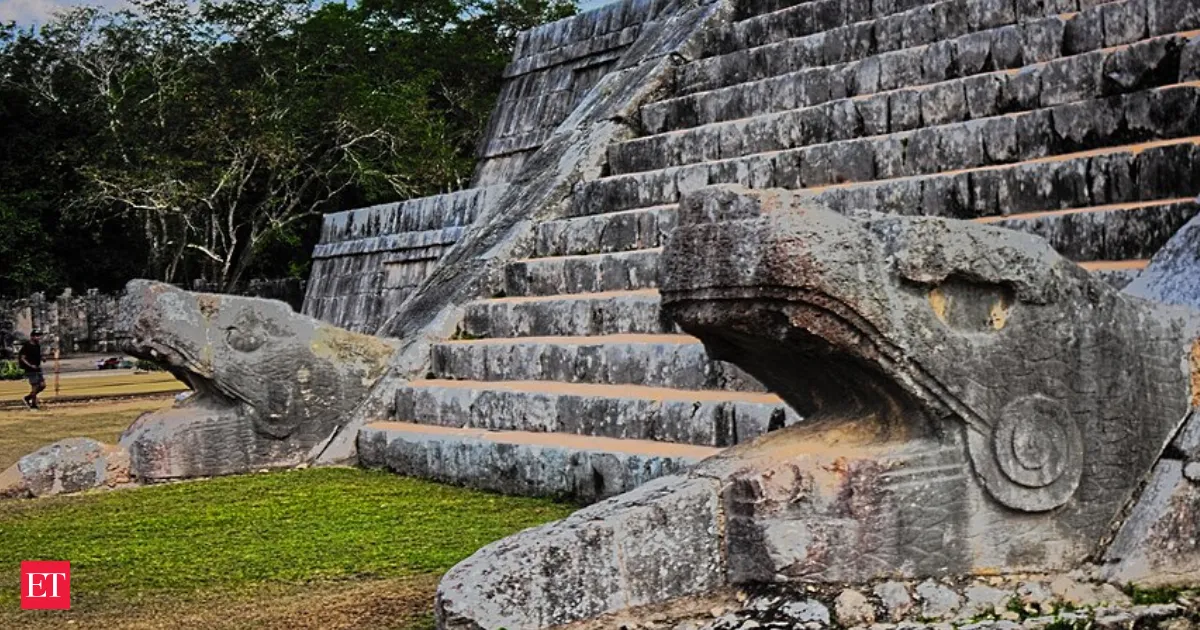
El Castillo at Chichén Itzá has long captivated visitors with mathematical precision and the equinox serpent shadow. But a 2018 Scientific Reports study used non-invasive electrical-resistance geophysics to map what sits below. Researchers detected a large karst cavity resembling a cenote, implying the Maya temple was built over a natural sinkhole in limestone terrain. No excavation followed, yet the finding is reshaping interpretations of how El Castillo’s underground setting may have influenced its construction and symbolism.
Swipe through stories, personalise your feed, and save articles for later — all on the app.