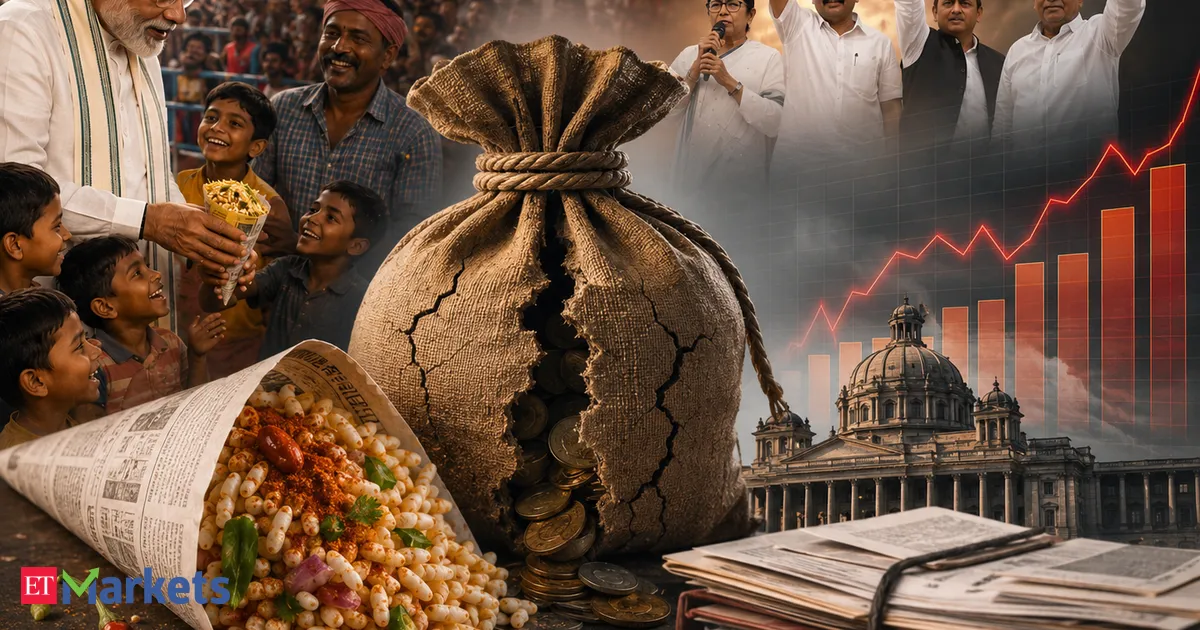
A seemingly light campaign moment during PM Narendra Modi’s West Bengal trail has morphed into a fiscal worry. Economists say election results have accelerated costly welfare promises that could add about Rs 1.69 lakh crore to already strained state finances, raising concerns over budget stress, funding gaps, and long term sustainability.
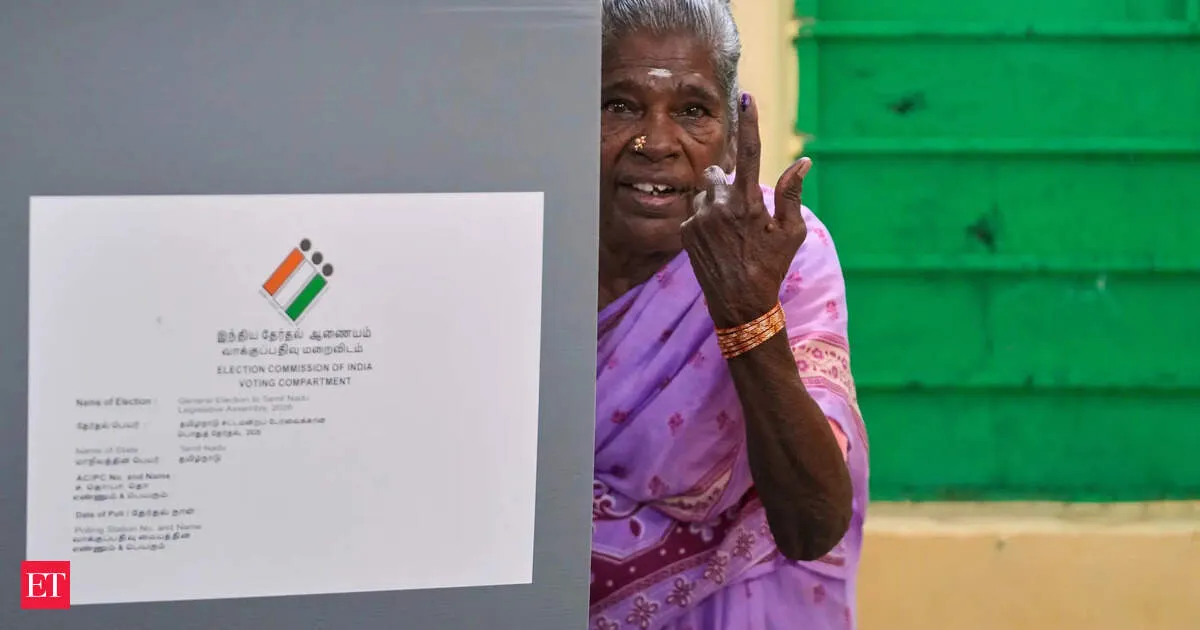
India’s latest state election results are fueling a new round of populist promises, with states pledging cash handouts and expanded welfare. Economists warn this could push fiscal deficits wider, even as the 3% deficit ceiling starts looking like a minimum. The spending race may also squeeze funding for infrastructure and job creation ahead of future polls.
Your news, in seconds
Get the Beige app — every story in 60 words, updated hourly. Free on iOS & Android.
India is piloting the e rupee digital currency to deliver welfare payments more efficiently and with less corruption. Trials are already funding farmers directly for equipment, while similar experiments target food distribution. Backed by “programmable” features, the e rupee is designed to restrict how money can be used, aiming to ensure subsidies reach their intended purpose.
Care Ratings says the upcoming Union Budget will aim to lift consumption by increasing welfare allocations and funding rural economic initiatives. It expects revenue expenditure to jump by about Rs 75,000 crore versus prior interim budgets, with higher support for employment guarantee schemes, PM Awas Yojana housing, PM Gram Sadak Yojana rural infrastructure and measures for labor-intensive small businesses.
India is moving cautiously on a central bank digital currency, aiming not just for payments tech but to reduce leakages in welfare delivery. Though its early rollout looks small next to China’s massive e-yuan adoption, officials believe a successful system could scale quickly—potentially making India one of the world’s biggest CBDC issuers.
A proposed AI Act is being scrutinized as Europe worries that AI and algorithmic decision-making are becoming embedded in welfare and social safety nets. Critics say these systems can quietly shape eligibility and access to support, undermining social and economic rights unless safeguards, transparency, and accountability are strong enough to protect people from errors and bias.
Never miss a story
Set alerts for the topics and sources you care about. Download Beige for free.
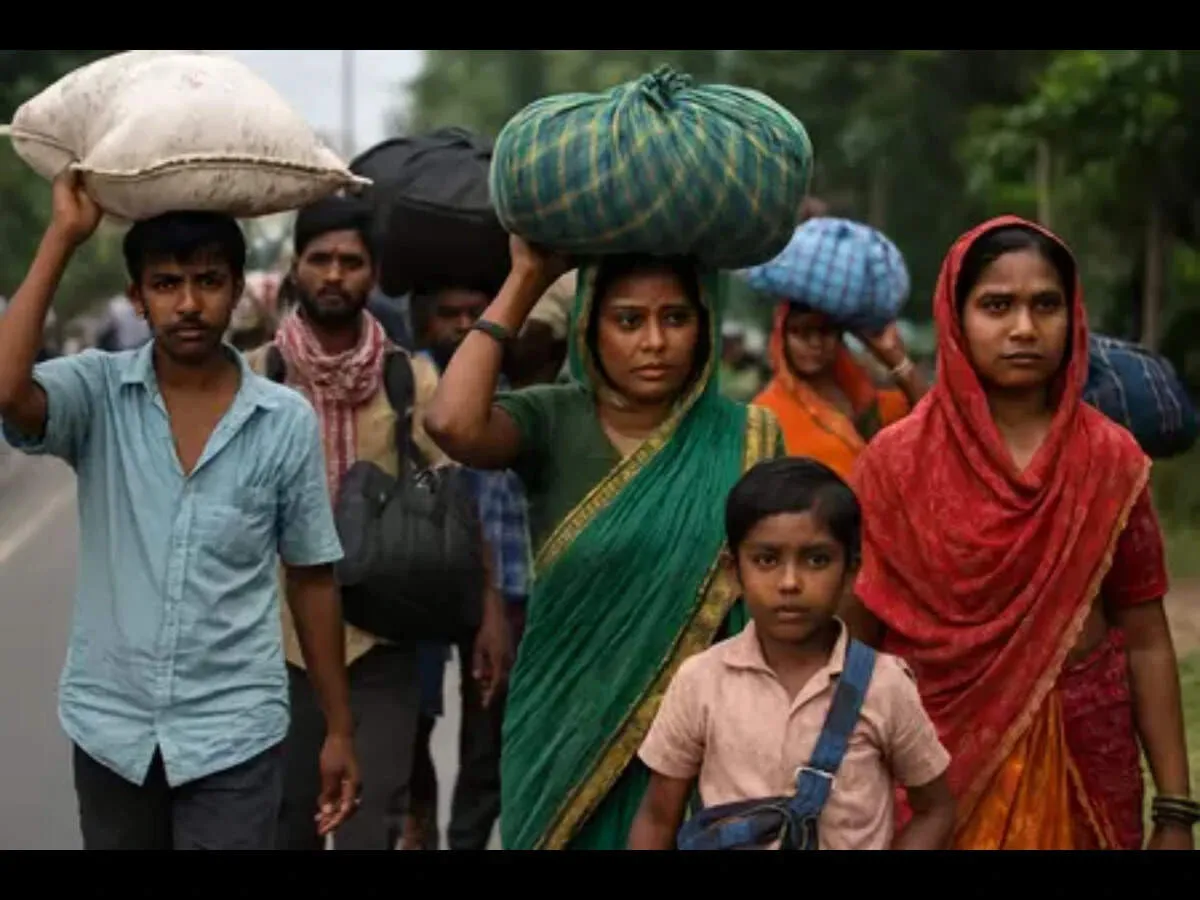
Six years after earlier promises, migrant workers are again facing worsening hardship. Protests have broken out over low wages and poor working conditions as living costs rise faster than government responses. Welfare schemes and housing programs are struggling to deliver on the ground, while uncertainty around new labour codes adds fresh risk. Rural distress is also rising, leaving workers trapped in a cycle of exploitation.
New research challenges the widely cited pre-tax Gini coefficient of 0.61, arguing it overlooks how government welfare reshapes household resources. By factoring in benefits such as food and housing, the post-fiscal Gini is reported to fall dramatically, even approaching zero, reshaping how India’s inequality is understood and debated.
Swipe through stories, personalise your feed, and save articles for later — all on the app.