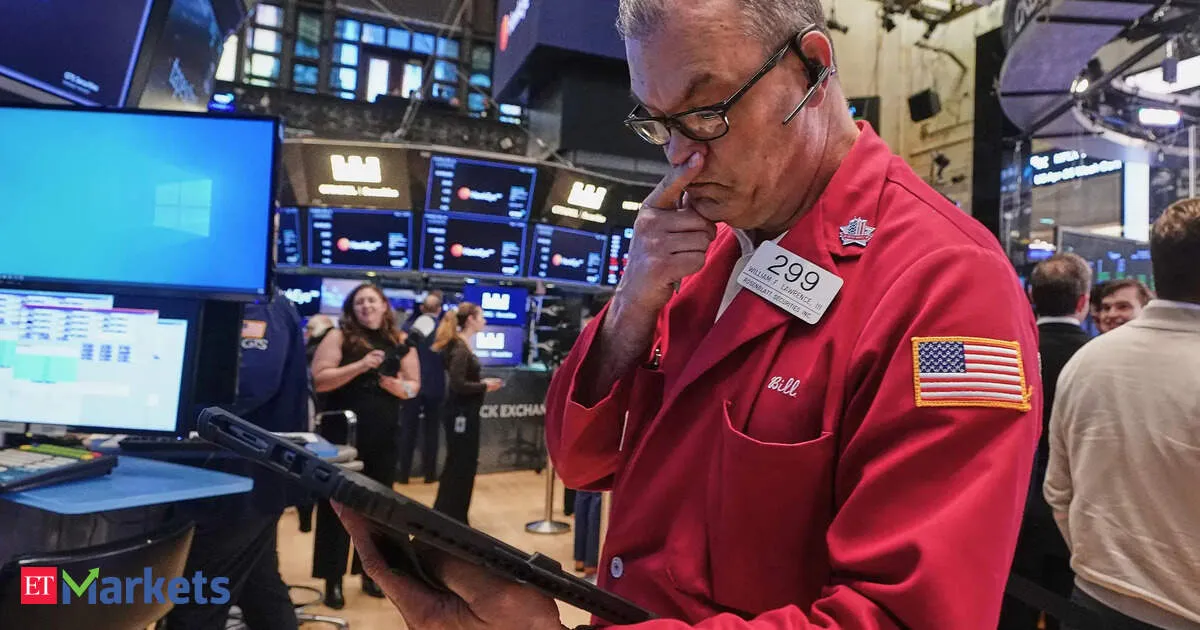
Wall Street is coming off another leg higher, but investors say next week’s earnings could test whether the rally is broad or fragile. Nvidia reports Wednesday, with its AI-driven surge watched as a read on data-center demand and whether rivals are eroding its lead. On Thursday, Walmart and other retailers including Home Depot, Target and TJX will reveal how inflation-pressured consumers are coping, after rising energy costs and hot price data. Analysts call retail resilience the key.
US markets took a sharp turn lower on Friday, May 15, 2026, with the Dow, S&P 500 and Nasdaq all falling after President Donald Trump concluded his China visit without easing key investor worries. The S&P 500 slid to 7,436 and the Nasdaq fell 1.25%. Nvidia dropped nearly 4% and Amazon also slipped as Treasury yields jumped on hotter-than-expected inflation data. Oil topped $108, the dollar strengthened, while gold and silver plunged amid renewed volatility and Iran uncertainty.
Your news, in seconds
Get the Beige app — every story in 60 words, updated hourly. Free on iOS & Android.
Wall Street opened sharply lower on Friday as inflation fears—linked to the Middle East conflict—pushed Treasury yields higher. That jump in yields threatens to derail a recent AI-fueled rally by tightening financial conditions for stocks. The S&P 500 and Nasdaq both dropped about 1% at the open, signaling risk-off sentiment returning quickly. Traders are now focused on whether higher yields persist and how markets interpret incoming inflation signals after the shock from geopolitical tensions.
U.S. stock futures tracking the Nasdaq and S&P 500 dropped more than 1% as Treasury yields jumped amid rising inflation worries tied to the Middle East conflict. The 10-year Treasury yield hit 4.54%, the highest since early June 2025, while bond markets priced in faster rate hikes and weaker growth. Even after Wall Street’s AI-fueled record closes, Brent crude climbed almost 3% to about $109 as the Strait of Hormuz remained closed, pressuring oil-heavy sectors like airlines.
U.S. markets climbed to fresh highs as Cisco delivered earnings and guidance that beat expectations, sending its shares up 14.6%—potentially its best day in 15 years. The broader rally also lifted two non-AI names: StubHub jumped 19.3% and Viking Holdings rose 10%, both posting stronger profit than analysts forecast. Results fueled optimism that consumers still spend, even as sentiment remains shaky. Treasury yields barely moved, while global trading tilted higher in Europe and Asia amid oil jitters tied to Hormuz shipping.
U.S. stocks surged Thursday as the Dow Jones reclaimed the 50,000 level, with the S&P 500 and Nasdaq hitting fresh records. The rally was driven by a mix of renewed optimism from a high-stakes Trump Xi summit in Beijing and a sharp earnings and chip-related boost in major tech names. Cisco’s results and guidance, plus Nvidia’s 4.2% rally after U.S. export approvals for H200 chip buyers, helped propel the market higher. Investors also monitored inflation and oil-linked risks.
Never miss a story
Set alerts for the topics and sources you care about. Download Beige for free.
Wall Street began higher on Thursday as Nvidia shares jumped, lifting overall sentiment. Investors also weighed fresh economic data and closely tracked developments tied to a high-stakes U.S.-China summit. With chip momentum in focus and geopolitics adding uncertainty, traders balanced near-term gains against potential volatility ahead.
US stocks climbed to record closing highs as AI-linked tech and chip shares drove gains in both the S&P 500 and Nasdaq. The rally faced pressure from hotter-than-expected inflation data, with a jump in producer prices reviving expectations of prolonged Federal Reserve tightening. Investors also weighed Trump-Xi talks and rising geopolitical risks, alongside a Morgan Stanley S&P target upgrade.
US stocks closed mixed on May 12 as cooling tech momentum pulled the S&P 500 and Nasdaq lower, while the Dow edged higher. West Texas Intermediate crude jumped amid renewed US-Iran tensions, adding pressure to energy costs. Fresh data showed April CPI rising to its highest level since May 2023, keeping consumer inflation concerns front and center.
U.S. markets watch a delicate balance as the dollar rises for a second straight session following key economic data, while traders weigh how durable the U.S.-Iran ceasefire really is. Investors are torn between signals of economic resilience and looming geopolitical risk, leaving the next move for the Dow, S&P 500 and Nasdaq highly uncertain.
Reading on mobile?
Open Beige in the app for a smoother experience — free on iOS and Android.
Wall Street edged lower as hotter than expected U.S. inflation and ongoing Middle East tensions weighed on investor sentiment. With CPI at a three-year high, traders are increasingly pricing in the Federal Reserve keeping rates steady for longer. While strong earnings offered some support, the inflation shock and geopolitical risk kept markets cautious.
US stocks finished lower as hotter-than-expected inflation and escalating US-Iran tensions hit investor sentiment. The S&P 500 and Nasdaq slipped from record levels, led by weakness in tech, while the Dow was comparatively steady. Rising oil prices and expectations that inflation may stay higher further dented hopes for Federal Reserve rate cuts and boosted bets on additional rate hikes.
US stocks opened lower on Tuesday as the S&P 500 and Nasdaq weighed a hotter-than-expected April inflation print and growing uncertainty over the Middle East conflict. Investors appeared to dial back expectations for a fast resolution even as they recalibrated interest-rate bets, pushing sentiment cautiously down at the start of the session.
Major Wall Street brokerages are pushing back their timelines for U.S. Federal Reserve rate cuts, citing lingering inflation pressures from high energy prices and a resilient labor market. BofA now sees no cuts in 2026 and expects easing only in mid-2027. Goldman similarly moved its first cut forecast from September to December 2026, reflecting persistent risk to disinflation.
Follow your favourite sources
Track sources, tags and categories — all in the Beige app.
US stocks closed slightly higher as AI momentum boosted semiconductor shares and strong earnings kept risk appetite intact, with over 80% of S&P 500 firms beating estimates. The upside faced a familiar headwind: rising crude prices and stalled US-Iran talks, which may revive inflation concerns. Traders now look to upcoming US inflation data and key macro indicators.
US markets are treading carefully as Iran tensions push oil beyond $100 and traders refocus on inflation risk. The Dow, S&P 500 and Nasdaq edged higher, but the VIX rose, signaling growing anxiety ahead of April CPI and PPI. Higher energy prices could quickly feed broader costs, while tech-led optimism faces fresh macro pressure.
Wall Street’s main indexes opened lower on Monday after last week’s record rally, as renewed concerns about stalled US-Iran talks lifted oil prices. Higher energy costs and heightened geopolitical risk dampened investor risk appetite, setting a cautious tone for trading. The market’s early moves reflect how quickly crude and politics are reshaping sentiment.
US markets are entering a critical stretch as investors weigh fresh inflation and consumer spending signals that could reshape interest rate expectations. While strong corporate earnings have supported stocks, tensions tied to Iran and headlines around President Trump meeting Xi add geopolitical risk. Rising energy prices are also in focus, threatening cost pressures and market volatility.
Stay informed on the go
Bite-sized news from 100+ trusted sources, right in your pocket.
Applied Aerospace and Defense, a private equity backed government contractor, has filed for a U.S. IPO after reporting a 24.8% revenue jump to $498.8 million in 2025. The company posted a $17 million net loss, but investors are watching its strong growth and its position supplying critical defense hardware.
Artificial intelligence startup Anthropic has signed a $1.8 billion computing deal with Akamai Technologies, aimed at meeting demand for its AI software. The announcement helped lift Akamai’s shares, reflecting investor optimism around long-term cloud expansion with a major AI partner. The deal also positions Akamai to supply key components needed for ongoing AI development.
Swipe through stories, personalise your feed, and save articles for later — all on the app.