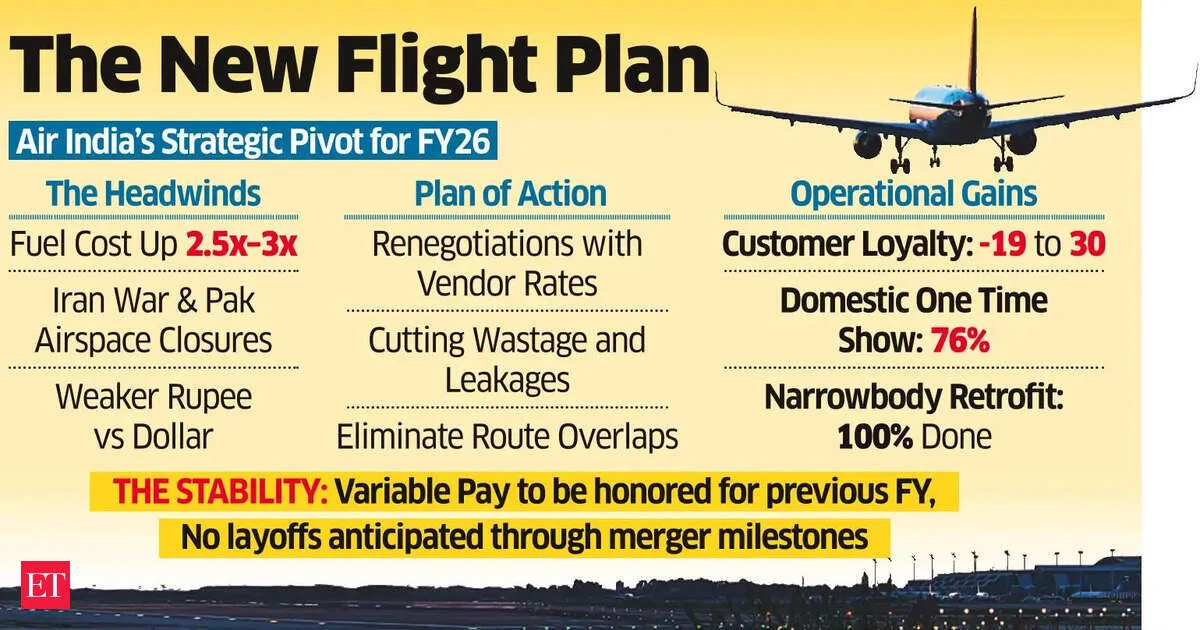
Air India is pressing pause on planned salary hikes as it responds to global headwinds and a more uncertain FY26 outlook. The airline is prioritising cost reduction after its expansion, while also optimising routes and improving on-time performance. Management says the savings are meant to protect service quality and ongoing improvements, even as staffing-related pay moves are delayed.
An employee says his workplace celebrated unity and shared struggle, framing colleagues as “family” during meetings. But in a performance review, he was lauded for exceeding targets and taking on extra duties, yet his request for a small raise was rejected citing “financial limitations,” pushing him to say he feels like he’s “divorcing” from the employer.
Your news, in seconds
Get the Beige app — every story in 60 words, updated hourly. Free on iOS & Android.
Indian companies are planning to hire more mid-level professionals, with salary hikes expected to stay moderate between 5% and 10% for 2026–27. While budgets tighten, firms also face persistent attrition risks, especially among mid-senior employees. The move suggests employers want experienced growth without escalating pay and retention costs.
Indian salaries are projected to rise 9.1% in 2026, according to an Aon survey, outpacing many global economies. Real estate, NBFCs and manufacturing are expected to lead the increases as employee attrition continues to fall toward pre-pandemic levels. Companies are also revising pay structures to comply with new wage codes, often reshaping compensation.
Indian companies expect salary increases to remain steady at around 9.1% in 2026, according to a report. Life sciences and manufacturing are forecast to lead with the biggest hikes, while most industries should see stable or positive trends. The report flags ITeS as the lone sector with a slight dip, with junior staff and individual contributors seeing the highest averages.
Swipe through stories, personalise your feed, and save articles for later — all on the app.