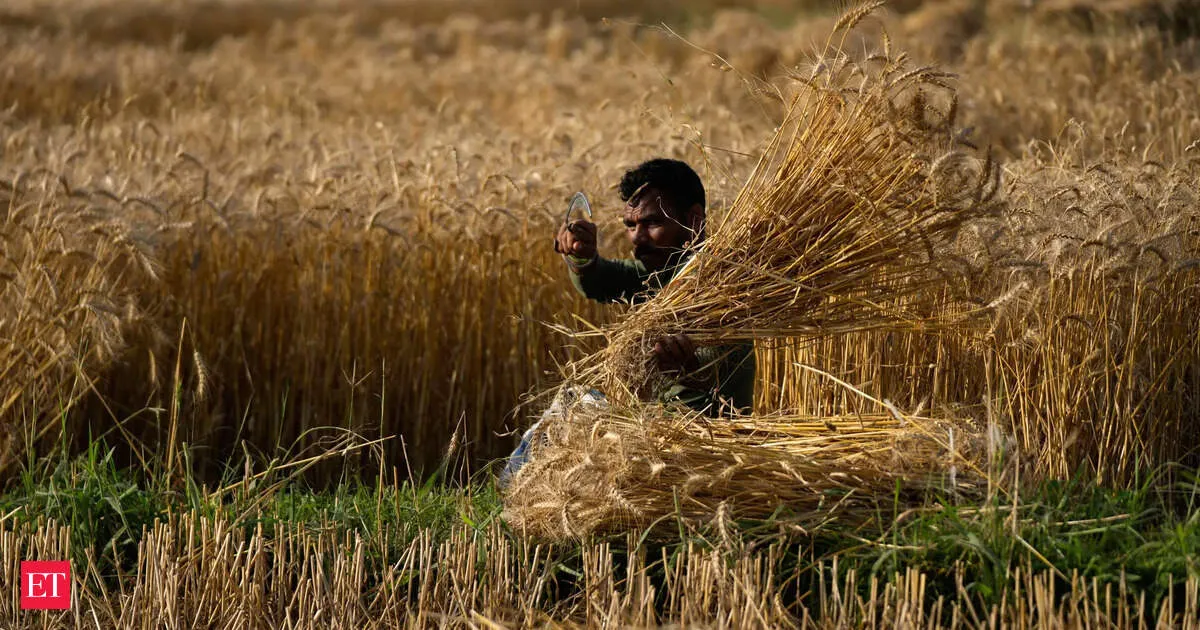
The Prime Minister’s Employment Generation Programme has generated jobs for over 36 lakh people and helped set up more than four lakh new businesses. Implemented by KVIC, the initiative reportedly spent its entire budget. Notably, many of the new enterprises are in rural areas, strengthening local economies and supporting more balanced growth across regions.
India’s severe heat wave and forecasts of below-normal monsoon rains are adding fresh pressure to inflation after a recent oil surge. With energy costs already elevated, weather stress could push prices—especially food—beyond the central bank’s target. Policymakers are weighing how this “dual hit” may slow growth while straining rural incomes.
Your news, in seconds
Get the Beige app — every story in 60 words, updated hourly. Free on iOS & Android.
India’s rural economy is bracing for headwinds as a weaker monsoon looms and farm costs rise amid fallout from the Iran war. Strong water reserves and food stocks may cushion the near term, but economists warn rural demand could soften in the second half of FY27. Investors and policymakers are watching closely for signals on growth and consumption.
Care Ratings says the upcoming Union Budget will aim to lift consumption by increasing welfare allocations and funding rural economic initiatives. It expects revenue expenditure to jump by about Rs 75,000 crore versus prior interim budgets, with higher support for employment guarantee schemes, PM Awas Yojana housing, PM Gram Sadak Yojana rural infrastructure and measures for labor-intensive small businesses.
Swipe through stories, personalise your feed, and save articles for later — all on the app.