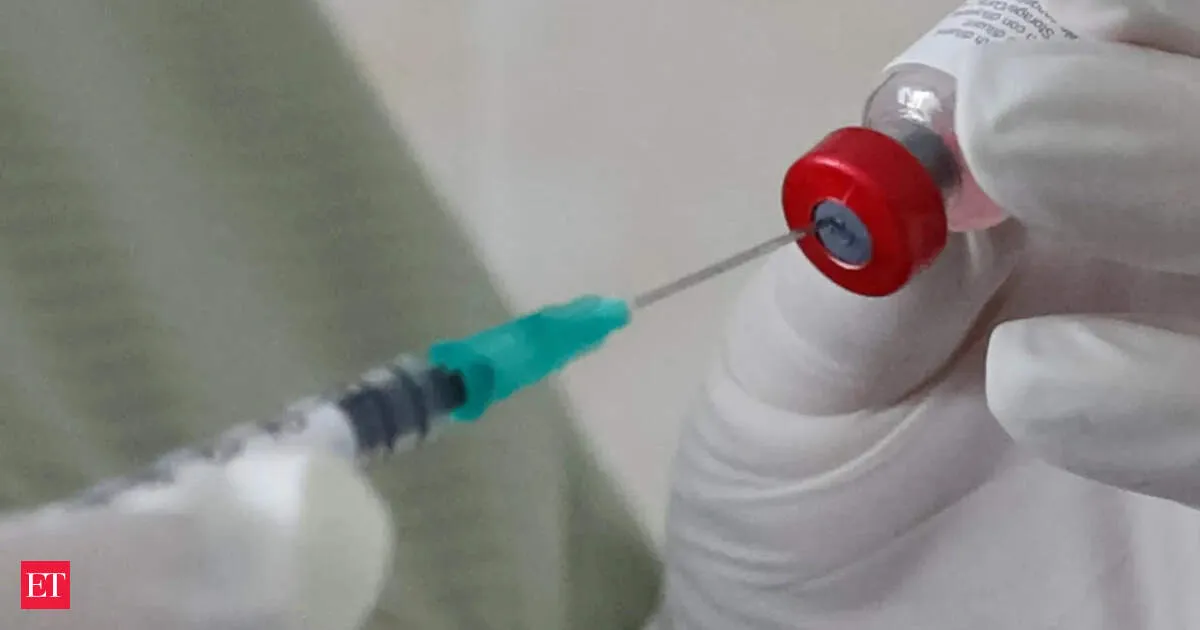
Dr Reddy’s Laboratories has launched a generic Semaglutide injection in Canada for adults with type 2 diabetes, following Health Canada approval granted on April 28, 2026. The move makes Canada the first G7 nation to authorize Semaglutide, positioning the company among the earliest generics entrants in that market. The launch follows Dr Reddy’s recent introduction in India under the brand name Obeda. Supplied as a sterile prefilled pen, it is offered in 2 mg and 4 mg strengths.
Roche Pharma has launched Tecentriq, India’s first under-the-skin immunotherapy for non small cell lung cancer. The injection takes about seven minutes, aiming to cut the burden of longer intravenous sessions. By simplifying administration, the company says the treatment can improve patient experience and quality of life while delivering essential cancer care more conveniently.
Your news, in seconds
Get the Beige app — every story in 60 words, updated hourly. Free on iOS & Android.
Dr Reddy’s Laboratories expects a gradual recovery in the coming fiscal year after last year’s profit dip hit by pressures in the US business. Growth remains solid across India, Europe, and emerging markets. The company’s outlook leans on upcoming launches including semaglutide and abatacept, alongside improved product mix and tighter cost controls to lift margins by FY27.
In April, Indian fund managers leaned into defensive stocks, with pharmaceuticals drawing fresh inflows tied to potential upside from the semaglutide patent expiry. Mutual funds also increased focus on NBFCs and asset management companies, adding PNB Housing Finance as money tilted toward retail lending. The broader shift points to worries over oil prices and West Asian geopolitical risks.
Pfizer is doubling down on India as its next growth engine, aiming to bring new medicines to market faster and at more affordable prices. The company sees major opportunity across cancer, obesity and vaccines, backed by plans for local clinical studies to support future launches and tailor outcomes for Indian patients.
Zydus Lifesciences is reportedly close to buying a US oncology drug maker in a deal valued at $100 to $150 million. The acquisition is expected to help the Indian company build its own distribution network for anti-cancer drugs in the US, while also bringing along the target’s biologic drug pipeline. A deal is expected soon.
Never miss a story
Set alerts for the topics and sources you care about. Download Beige for free.
Novartis says it is expanding how India contributes to its global drug development. The company is shifting more early stage research to India while doubling down on innovative medicines. With plans to bring additional new medicines to market soon, the move signals deeper long term commitment to India’s healthcare ecosystem and its workforce.
The Bombay High Court ruled in favour of Sun Pharmaceutical Industries in a trademark dispute against United Biotech. It restrained United Biotech from using a similar mark, holding that Sun Pharma’s “Octride” has the stronger claim. The case relates to drugs used for acromegaly and carcinoid tumours, with the judgment protecting Sun’s reputation and goodwill.
Emcure Pharmaceuticals is accelerating domestic expansion while scaling R&D and manufacturing capacity. The company is also scouting acquisition opportunities both in India and abroad, aiming to add new products to fuel growth. A key driver is its partnership with Novo Nordisk for GLP-1 therapies, alongside a pipeline of complex injectables poised to support momentum ahead.
Sun Pharmaceutical Industries is exploring multiple financing routes for its proposed $12 billion acquisition of Organon & Co. Reports say lenders are considering swapping Organon bondholders into Sun Pharma debt, including a possible euro-denominated bond, while Sun Pharma also plans to raise $3 billion to $4 billion in offshore loans. Deal approvals are expected by December.
Reading on mobile?
Open Beige in the app for a smoother experience — free on iOS and Android.
India’s drug regulator is starting a major overhaul by planning to recruit more than 1,500 scientists and technology specialists. The move is designed to streamline drug approval processes and bring them closer to international benchmarks. Officials say the expanded expertise will strengthen pharmaceutical governance and help the regulator work faster and more consistently as the sector evolves.
The Central Drugs Standard Control Organisation has warned that drug applications with unanswered queries will be rejected if applicants do not respond within 30 days. In a public notice dated May 4, CDSCO said several applications have remained pending at the applicant’s end since 2016, signalling stricter timelines for regulatory processing.
Pfizer reported higher-than-expected first-quarter sales and profit, boosting investor confidence. The company also pointed to a patent extension for its Vyndamax heart treatment and a favorable European court ruling tied to its COVID-19 vaccine. Together, the wins are expected to help secure stronger growth prospects after 2028.
The US has raised fresh concerns about India’s high customs duties on IP-intensive goods and a proposed mandatory blanket license for AI developers using copyrighted works. India is still on the US “Priority Watch List” over weak IP protection, with fears including trade secret disclosure and patent revocations, especially affecting the pharmaceutical sector.
Follow your favourite sources
Track sources, tags and categories — all in the Beige app.
Aurobindo Pharma said its subsidiary CuraTeQ Biologics has received a compliance notice from Health Canada for its cancer biosimilar Bevqolva, a bevacizumab-based treatment used across multiple cancers. The development signals Health Canada’s confirmation of safety and efficacy, paving the way for broader access to potential cost-effective options for patients in Canada.
India’s ORS market has taken a hit after the government tightened labelling norms, limiting when sugary drinks can be marketed as ORS. The change has disrupted supply and seasonal purchasing patterns, pressuring pharmaceutical firms that rely on predictable demand spikes. Companies now face a tougher path to maintain sales as compliance reduces the category’s appeal.
RPG Life Sciences says it is doubling down on its API business as the growth engine, while lining up a significant acquisition to expand capacity. The company also plans to enter the GLP-1 weight-loss therapy market by August-September, despite geopolitical risks. Its strategy centers on niche, complex molecules and moving into new therapy areas.
Eli Lilly raised its annual profit and revenue outlook after a stronger-than-expected first quarter, powered by steady demand for its GLP-1 therapies. Results followed the company’s initial reporting since launching its oral GLP-1 pill, Foundayo, with continued momentum for weight-loss and diabetes brands Zepbound and Mounjaro.
Stay informed on the go
Bite-sized news from 100+ trusted sources, right in your pocket.
Sun Pharma’s $11.75 billion acquisition of Organon & Co is set to expand its global footprint, commercial reach, and product diversification, including women’s health and biosimilars. The move aims to strengthen long-term growth, but success will hinge on how smoothly management integrates Organon’s operations and controls the deal’s debt burden.
Sun Pharma is strengthening its global footprint with the acquisition of New Jersey based Organon. The deal expands its portfolio across dermatology, oncology, and women’s health while creating a route into markets such as China and Brazil. With strong finances underpinning the move, Sun expects quicker returns as it scales the combined capabilities and reach.
Swipe through stories, personalise your feed, and save articles for later — all on the app.