India’s top software exporters could lose $200 billion in market value from their peak levels as disruptive AI changes how clients deploy technology services. A basket of leading firms hit a record $413 billion aggregate market cap on December 13, 2024, but by May 14, 2026 it dropped to $227 billion, a 45% fall. So far in 2026, the group has shed about 30%, with TCS and Wipro down more than 50% from peaks.
South Korea and Taiwan are gaining ground on India in market capitalization as the AI chip sector powers investor sentiment. While their valuations have risen sharply, India’s market cap has edged slightly lower. Analysts point to shifting momentum within key semiconductor-linked companies, suggesting a changing balance of power across emerging markets.
Your news, in seconds
Get the Beige app — every story in 60 words, updated hourly. Free on iOS & Android.
The week kicked off on a bright note as easing geopolitical tensions and steady Q4 earnings improved investor sentiment. But the upward momentum couldn’t last: crude oil prices climbed, Asian markets offered weaker cues, and persistent FII outflows dampened sentiment. Despite the drag, Reliance emerged as the biggest winner among the top firms.
Alphabet added about $420 billion to its market cap after a strong Q1 2026 earnings report and growing demand for AI services. The company is nearing a $4.4 trillion valuation and is roughly 6% away from overtaking Nvidia. Investors are now focused on whether revenue and profit growth can sustain momentum as AI demand expectations rise.
Infosys has dropped out of India’s top 10 most valuable firms in April 2026 after losing nearly ₹2 lakh crore in market value since January. Even with stronger Q4 FY26 revenue and profit, disappointing FY27 guidance and AI-driven concerns over legacy IT demand pressured the stock. LIC and Bajaj Finance replaced Infosys, underscoring a shift toward banks and non-IT leaders.
India’s market cap rankings are seeing a quiet reshuffle at the top. Reliance stays No 1, but HDFC Bank has overtaken Tata Consultancy Services. Bharti Airtel makes a major jump into the top tier, while Infosys slips down the order. ICICI Bank holds steady and State Bank of India rises despite volatility.
Never miss a story
Set alerts for the topics and sources you care about. Download Beige for free.
Nvidia’s stock is soaring to new highs as relentless demand for AI chips meets massive spending from big technology firms. The surge has pushed the company’s market value to about $5.2 trillion, fueled by rapid revenue growth and rising investor enthusiasm. Analysts expect momentum to continue, but competition and next-quarter earnings will decide whether Nvidia can sustain the rally as AI and cloud markets expand.
Seven of the top-10 most-valued Indian companies collectively lost Rs 2 lakh crore in market capitalisation over the past week. Tata Consultancy Services and Reliance Industries were the biggest laggards as their shares slid, echoing a broader bearish pullback across equities that weighed on overall market sentiment.
Nvidia has crossed a $5 trillion market cap as investors rush toward its AI chips amid a surge in demand. The broader rally is spilling into AMD and Intel as AI infrastructure projects accelerate faster than chip supply can keep up. The result is a sharp valuation jump driven less by replacement cycles and more by the race to build computing capacity now.
Bitcoin is holding near recent highs around $78K while Ethereum remains steady near $2,300, but the rally is losing steam after a strong rebound. Global crypto market capitalization dipped slightly as geopolitical tensions and uncertainty in monetary policy weighed on risk appetite. Despite mixed altcoin moves, investors appear to be concentrating capital in leading coins, treating Bitcoin as a macro hedge-like alternative.
Reading on mobile?
Open Beige in the app for a smoother experience — free on iOS and Android.
Nvidia has reclaimed the $5 trillion market cap milestone after NVDA climbed more than 5% in one session. The surge is being attributed to accelerating global demand for AI chips across data centers, cloud platforms, and enterprise systems. With revenue already above $215 billion and profits leading the sector, analysts are pushing price targets higher—though valuation risks are also being questioned.
AMFI’s H2 CY26 reclassification could demote nine midcap stocks, including Physicswallah and Jubilant Foodworks, if revised market-cap thresholds are approved. According to Nuvama Institutional Equities, the change may force mutual funds to rebalance portfolios and investors to reconsider stock positioning as categories shift between midcap and smallcap.
Nuvama Institutional Equities expects AMFI’s H2 CY26 categorisation to be reshuffled as market-cap thresholds change. Some stocks currently tagged as largecaps, including Mazagon Dock, could be moved into midcaps, while midcaps may drift toward smallcap status. The shift highlights how valuation swings can rapidly alter India’s equity segmentation.
Indian Oil has been a steady earner for India Inc, contributing about 3% of profits, yet its market cap has barely moved for seven years. The gap between rising profitability and stagnant valuation raises questions about market confidence, pricing dynamics, and how investors view future cash flows for a state-linked energy giant.
Follow your favourite sources
Track sources, tags and categories — all in the Beige app.
Microsoft has surged during the AI gold rush, with its stock up over 41% this year—far outpacing the S&P 500. Even as some investors worry it has run too fast, analyst Dan Ives predicts Microsoft can join Apple in the $3 trillion club by early 2024, supported by its expanded OpenAI investment totaling more than $13 billion.
Six companies with market caps above Rs 1,000 crore reported declining EPS for four consecutive quarters through June 2025. The repeated drop points to persistent pressure on profitability and weaker financial performance rather than a one-off setback. Investors may reassess earnings durability and cost control as the trend continues into the latest reporting cycle.
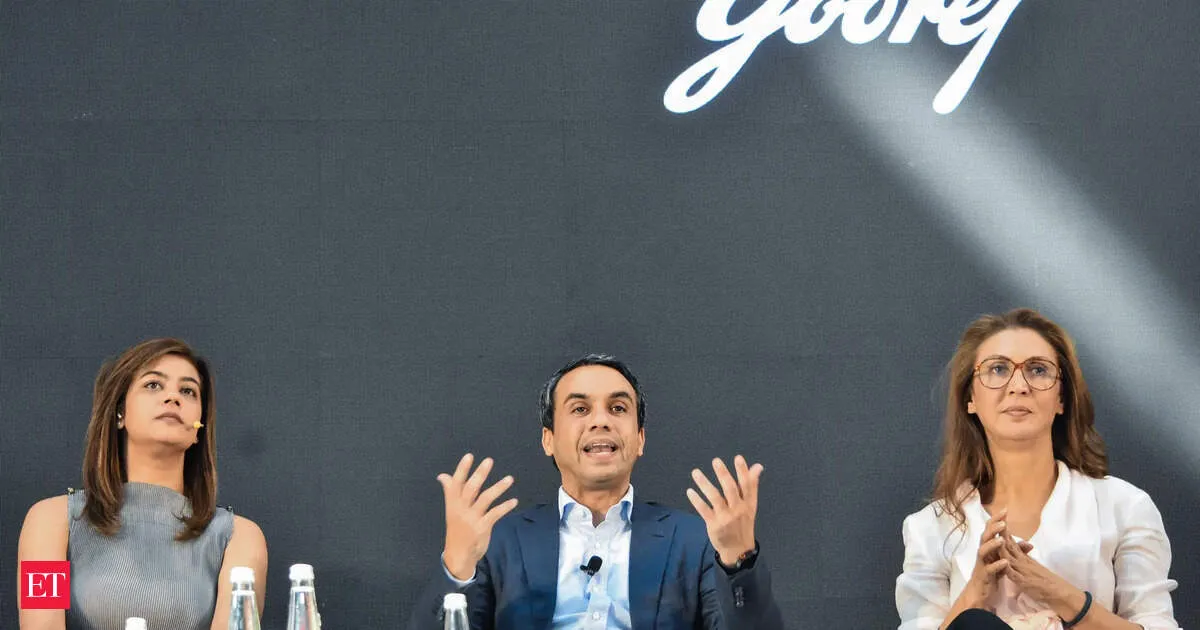
Godrej Industries Group has outlined a growth plan to reach ₹5 lakh crore market capitalization by 2031. The group wants to expand the number of listed companies from three to five, with Godrej Capital and its chemicals business among potential candidates. The roadmap doubles down on value creation from existing businesses, targeting 15%+ annual sales growth and 20%+ earnings growth.
Swipe through stories, personalise your feed, and save articles for later — all on the app.