As the rupee weakens, India’s Income Tax department says it is intensifying checks on suspicious outward flows via banks and crypto wallets. Using information-sharing with Thailand, it flagged remittances routed to Thailand’s money-laundering ecosystem, including cases where the “overseas education” purpose code S0305 and incorrect PAN details were used to bypass the RBI’s LRS cap of $250,000 per year. Investigators also traced transactions tied to UPI IDs linked to gaming operations across multiple countries and to crypto-linked adult and betting networks.
At the Groww India Investor Festival 2026, Edelweiss MF CEO Radhika Gupta urged investors to treat global diversification as long-term balance, not a short-term return chase. Speaking at “Beyond Bharat: Should your portfolio have a passport?”, she likened an allocation to an Indian thali—stuffed with variety, not extremes. The panel highlighted that themes like AI, semiconductors, and hyperscale cloud remain underrepresented in India, while access via GIFT City and LRS is improving.
Your news, in seconds
Get the Beige app — every story in 60 words, updated hourly. Free on iOS & Android.
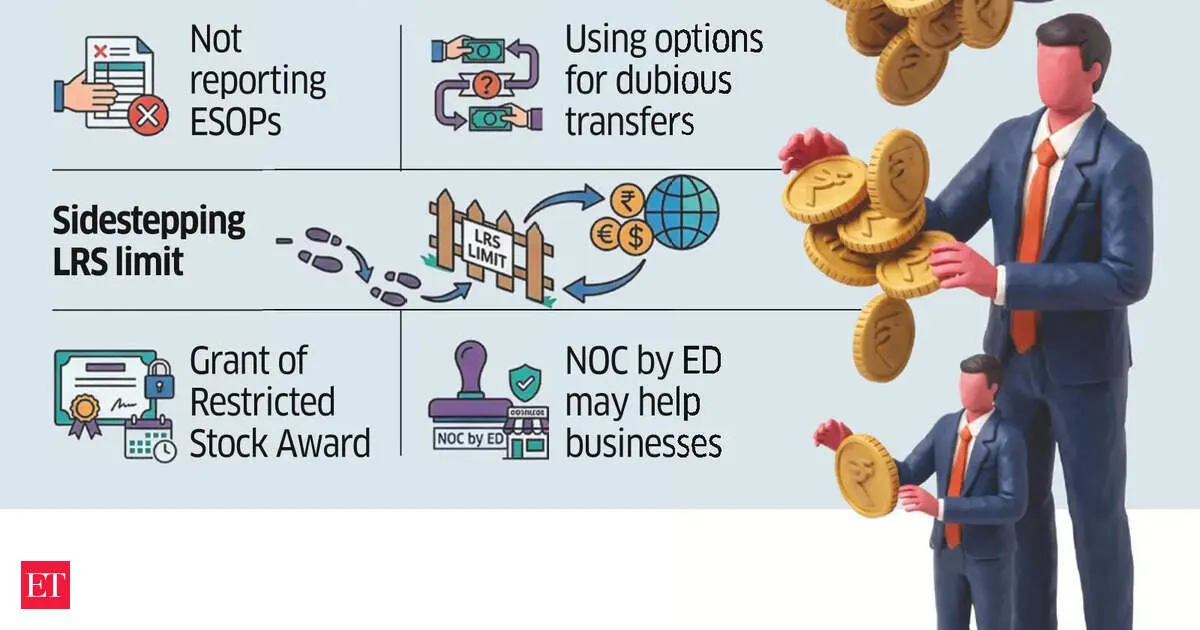
The Enforcement Directorate has begun probing employee stock options (ESOPs) offered by foreign firms to Indian workers. The investigation focuses on whether such ESOPs were misused to launder money and circumvent foreign remittance rules. Experts warn that fake or manipulated ESOP arrangements could help hide overseas funds or push remittances beyond permissible limits.
Union Budget 2026 brings relief for Indians sending money abroad under the Liberalised Remittance Scheme. TCS for overseas education and medical expenses falls to 2 percent from 5 percent, easing the upfront tax burden. The budget also streamlines TDS for businesses providing manpower services, fixing taxes at 1 percent or 2 percent under contractor provisions.
Swipe through stories, personalise your feed, and save articles for later — all on the app.