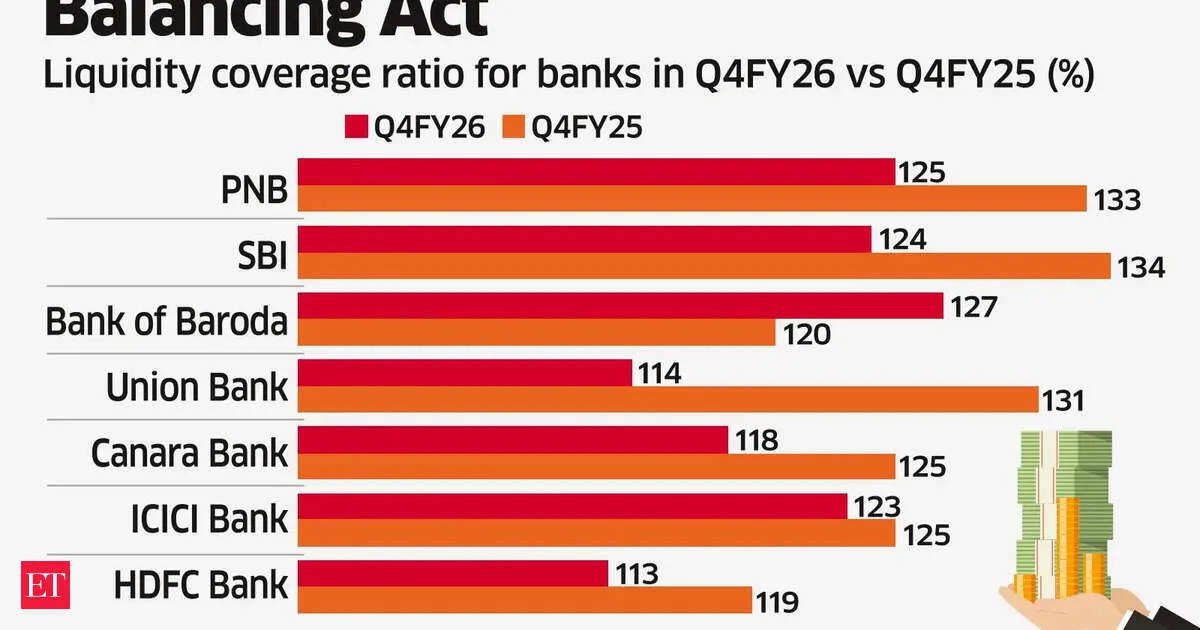
State-run banks in India are edging closer to regulatory minimums as liquidity coverage ratios fall, driven by loan growth outpacing retail deposit growth. In the March quarter, major PSU banks saw LCR drop by 10–12 percentage points to around 114%–118%, nearer the 100% threshold. Union Bank, Canara Bank and SBI reported sharp year-on-year declines while loans grew faster than deposits. Analysts warn the “easy” strategy of funding credit using excess liquidity is running out, though new norms from Q1 FY27 may ease runoff rates.
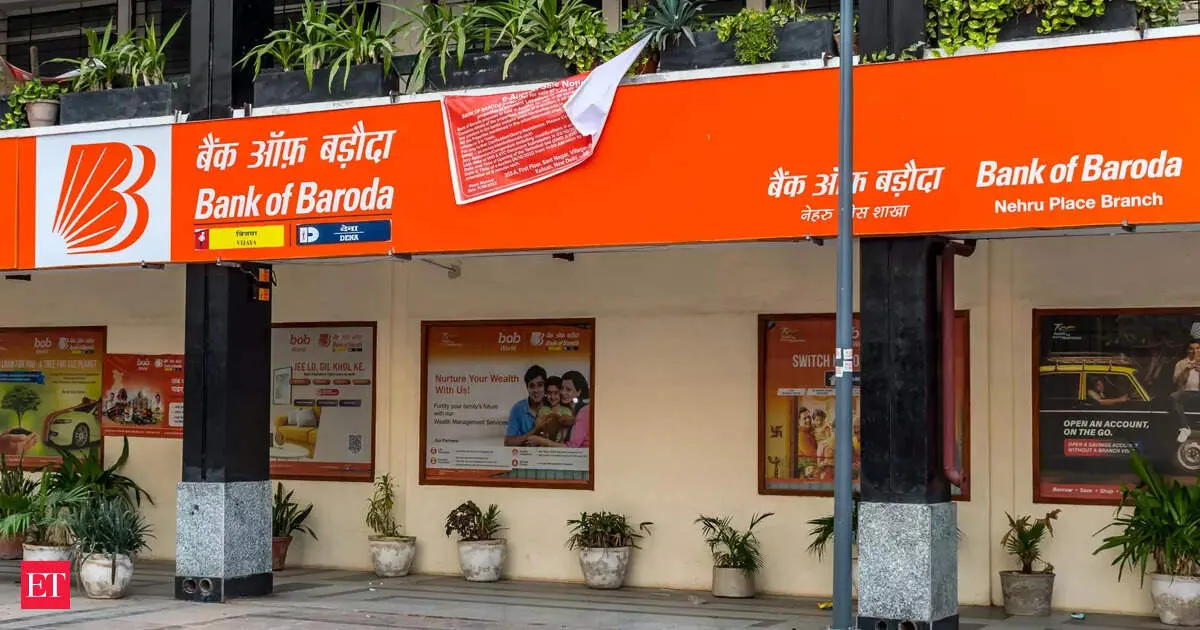
Bank of Baroda plans to grow its corporate lending 10% by FY27, backed by a Rs 50,000 crore loan pipeline, especially strong in investment lending demand. The bank says it will lean on external benchmark lending rates to protect margins even as deposit costs remain a key pressure point. Asset quality is reported as solid, with strength in MSMEs.
Your news, in seconds
Get the Beige app — every story in 60 words, updated hourly. Free on iOS & Android.
State Bank of India reported a record profit above ₹80,000 crore, even as investors worried about net interest income and margin pressure. Chairman CS Setty said net interest margins have likely bottomed out and should stabilize around 3%. SBI also pointed to strong deposit growth and expects 13–15% loan growth across segments in FY27, while watching global risks closely.
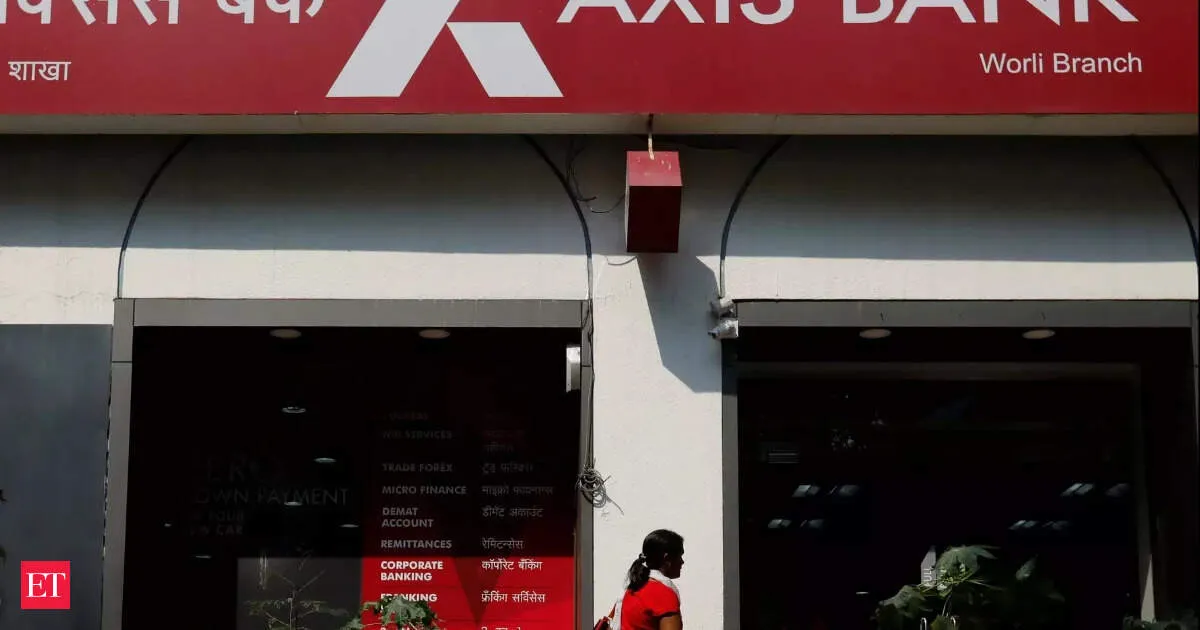
Axis Bank has raised a three-year $500 million offshore loan from Mitsubishi UFJ Financial Group, using it to support lending and general business needs. The move highlights mounting pressure on Indian banks as loan growth continues to outpace deposit growth, with Axis reporting 19% loan growth versus 14% deposit growth in the year ended March.
Banking and financial services veteran Deepak Parekh says global geopolitical shocks are unlikely to create systemic risk for India’s BFSI sector. Still, he expects a short-term slowdown in loan growth. Parekh also flagged rising REIT momentum, low insurance penetration, moderated deposit mobilization as retail shifts to mutual funds, and an AI transition that’s only beginning in finance.
Tamilnad Mercantile Bank has reported a 28% jump in Q4 profit, supported by stronger business growth, higher income and improved margins. Advances and deposits rose steadily, while asset quality strengthened—signaling healthier balance-sheet performance. The bank’s results point to robust operational execution and continued expansion across both lending and deposit segments.
Never miss a story
Set alerts for the topics and sources you care about. Download Beige for free.
PNB Housing Finance expects 18–20% loan growth this fiscal year, with an ambitious push to build its loan book to Rs 1 lakh crore by FY27. The strategy leans on affordable and emerging customer segments, while recoveries from previously written-off loans are expected to keep credit costs under control.
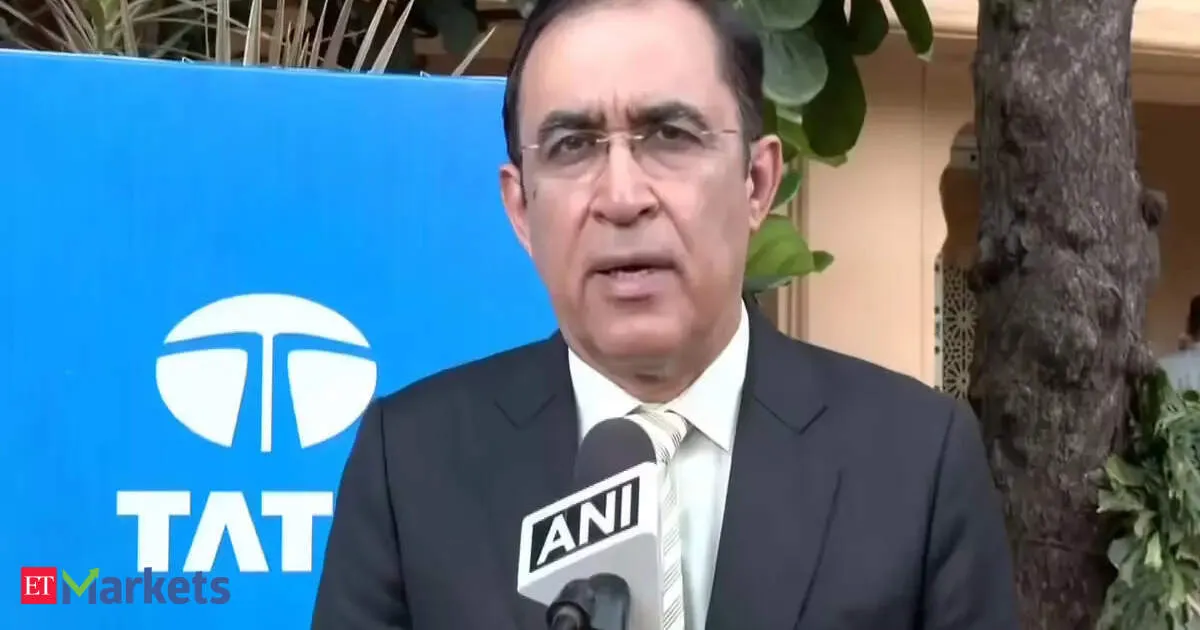
Tata Capital expects a strong FY27 performance supported by growth, better margins and operating efficiency. The firm highlights a continued drop in credit costs, attributing it to a disciplined risk culture and the adoption of AI. Looking ahead to FY28, it targets 23–25% loan growth, focusing on housing finance and retail products to improve returns.
Swipe through stories, personalise your feed, and save articles for later — all on the app.