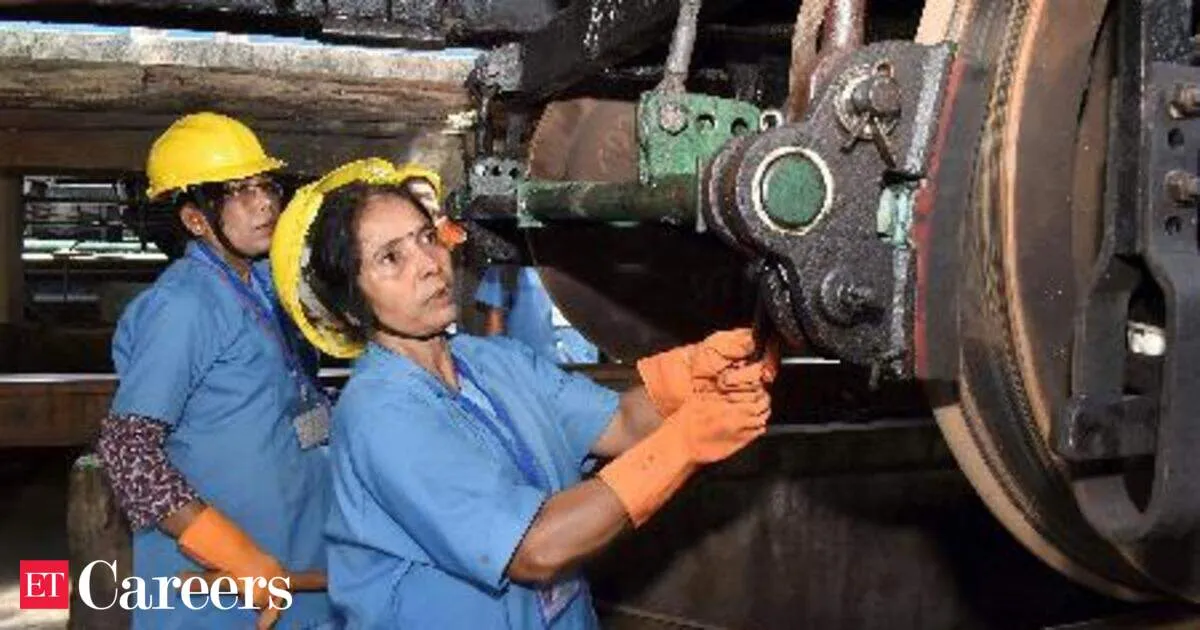
SBI Research says India’s female labour market is moving toward stability, driven by higher education, greater household agency, and social mobility. The report finds a gradual shift from casual to regular wage employment, suggesting a more resilient workforce ahead. But persistent gaps remain across education levels, regions, and social groups, tempering the overall progress.
India’s labour market is changing shape, SBI Research says. Over 37 years, agriculture’s share of employment has eased by about 23%. Meanwhile, large enterprises employing more than 20 workers now account for 13.7% of the workforce, up from 10.8% in 2024, tied to a renewed manufacturing push. The report also flags regional gaps in conditions.
Your news, in seconds
Get the Beige app — every story in 60 words, updated hourly. Free on iOS & Android.
India’s labour market is quietly being re-engineered as agriculture slowly loses ground, according to an SBI Research report built on the latest PLFS 2025 unit-level data. The study suggests employment and work participation are moving in step with the country’s broader economic transition, reshaping where people work and how labour markets function.
India’s statistics ministry plans to release granular city-level reports for major urban centers. The new publication will draw on the Periodic Labour Force Survey and the Annual Survey of Unincorporated Sector Enterprises, giving a clearer picture of local labour markets and small enterprise activity. Officials say the data will strengthen policy decisions and improve understanding of urban economic dynamics.
Canada will tighten recruitment for low wage roles under its Temporary Foreign Worker Program starting April 1, 2026. Employers must advertise positions for eight weeks and demonstrate efforts to hire youth aged 15 to 30 before applying for an LMIA. The policy is designed to prioritize Canadians and permanent residents and safeguard the domestic labour market.
A FED report released Thursday argues that India’s high minimum wage floors are slowing down the creation of formal jobs. It says workers should be able to negotiate wages freely, while the government should allow regional flexibility in the national floor wage to reflect local realities and avoid shutting out poorer states from formal employment growth.
Never miss a story
Set alerts for the topics and sources you care about. Download Beige for free.
Swipe through stories, personalise your feed, and save articles for later — all on the app.