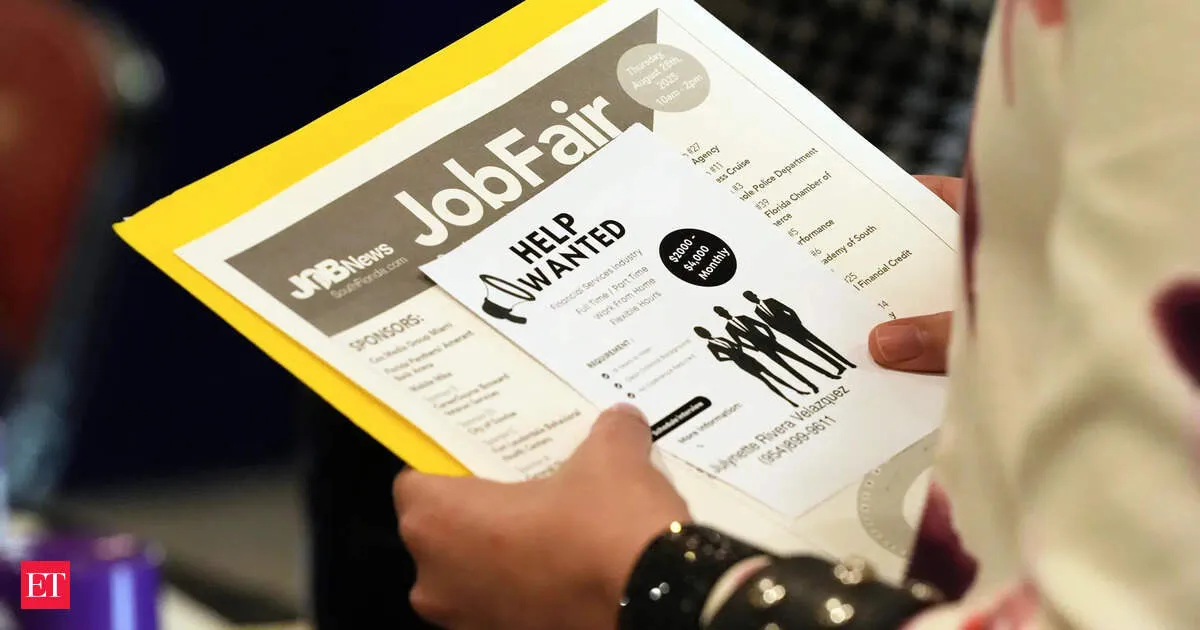
US initial jobless claims rose moderately to 211,000 last week, signaling no major shift. The labor market remains stable as the unemployment rate held at 4.3%. Inflation pressures are still building: producer prices recorded their biggest jump in four years, but nonfarm payrolls continued strong gains.
Major Wall Street brokerages are pushing back their timelines for U.S. Federal Reserve rate cuts, citing lingering inflation pressures from high energy prices and a resilient labor market. BofA now sees no cuts in 2026 and expects easing only in mid-2027. Goldman similarly moved its first cut forecast from September to December 2026, reflecting persistent risk to disinflation.
Your news, in seconds
Get the Beige app — every story in 60 words, updated hourly. Free on iOS & Android.
US employers added 115,000 jobs in April, topping expectations even as the Iran war disrupted oil supplies and pushed gas prices higher. The unemployment rate held steady at a low 4.3%, signaling resilience for now. Still, economists caution the conflict’s economic effects could take longer to show up in hiring and the broader labor market.
US employers kept surprising the market in April, adding 115,000 jobs even as uncertainty from the Iran war weighed on global sentiment. Alongside the steady hiring, average hourly earnings rose 0.2% from March and 3.6% year over year, aligning with the Federal Reserve’s push toward a 2% inflation target.
US private-sector job growth accelerated in April and beat expectations, according to payroll firm ADP. The gain was driven by sustained strength in health care and a rebound across other areas, including trade, transportation, and utilities. ADP said these factors collectively fueled the month’s faster hiring pace, signaling improving labor momentum.
A new study finds Trump’s immigration crackdown harmed employment rather than boosting it. Industries targeted by stricter enforcement saw fewer undocumented workers, but overall labor demand also weakened, leading to job losses for some US-born workers as well. The research suggests the policy did not generate new opportunities for Americans, instead reducing hiring across affected sectors.
Never miss a story
Set alerts for the topics and sources you care about. Download Beige for free.
OpenAI CEO Sam Altman says AI won’t replace workers, arguing it will make people busier by augmenting human capabilities. While acknowledging significant labor market disruption, he frames OpenAI’s approach as building tools that help rather than substitute. His remarks also echo the company’s plans to nearly double its workforce and its stated principles for developing artificial general intelligence.
Starting in May, the UAE plans to introduce an AI and robotics system to screen work permit applicants. The move is designed to make the labor market more efficient and to draw in skilled professionals. Candidates will be evaluated using factors such as skills, education, work experience, and knowledge.
India’s labor market is showing a shift as blue-collar roles—especially delivery and driver jobs—see faster salary growth than some entry-level white-collar positions. Manufacturing pay also rises, while metro jobs generally offer higher pay than smaller cities. The IT sector remains a baseline leader, yet the gender pay gap continues to persist despite the overall increases.
New research from Anthropic uses “observed exposure” to measure how AI actually affects specific occupations. It finds no broad increase in overall unemployment, but signals an early warning: hiring has slowed for young workers in the most AI-exposed professions. The study blends AI capability data with real-world usage patterns to spot labor market shifts early.
Reading on mobile?
Open Beige in the app for a smoother experience — free on iOS and Android.
Georgia will roll out a mandatory work permit system for most foreign workers from March 1, 2026, replacing the current informal approach. Employers will need to advertise vacancies before seeking permits. Foreign workers already in the country will have until January 1, 2027, to comply. The government says the change will improve labor oversight and reduce illegal employment, with penalties for violations.
Swipe through stories, personalise your feed, and save articles for later — all on the app.