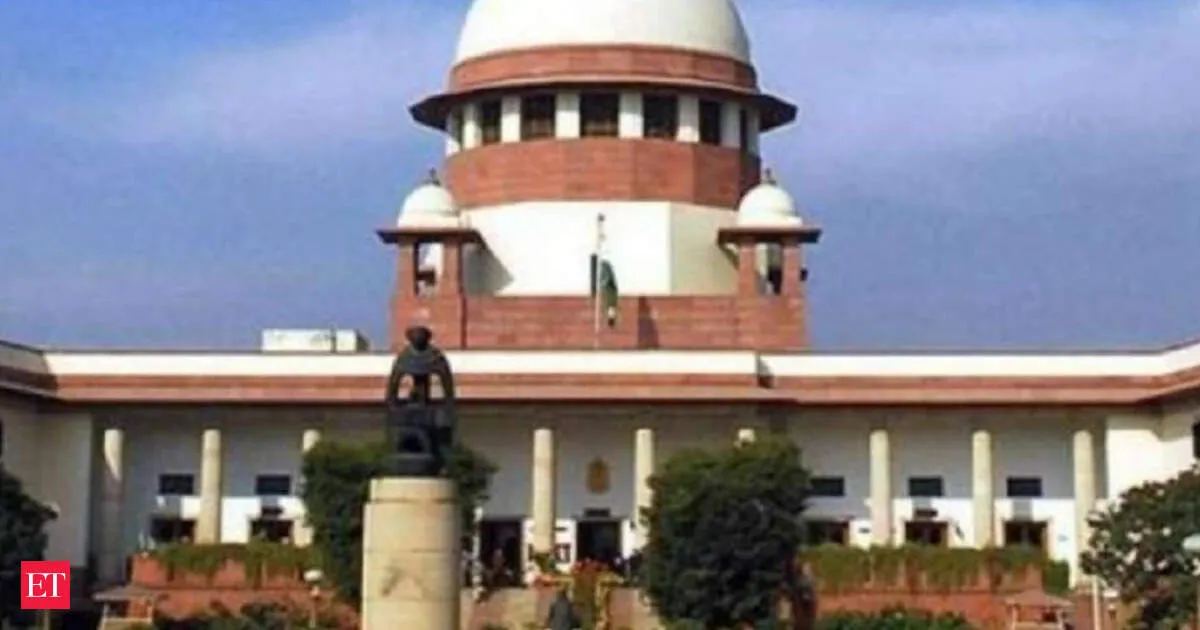
Rani Kapur has moved the Supreme Court seeking to bar Priya Kapur from handling affairs of the RK Family Trust and five related businesses. The plea lands as the court prepares a mediation process, with Rani alleging Priya is pursuing an unlawful takeover of family resources. The dispute could hinge on who controls the trust during talks.
The Supreme Court ruled that anyone accused of murdering or abetting a murder cannot inherit the victim’s property. The restriction applies whether the transfer would happen through a will or through intestate succession. Crucially, the court said the disqualification holds even if the trial is still ongoing, reinforcing justice and preventing benefits from alleged wrongdoing.
Your news, in seconds
Get the Beige app — every story in 60 words, updated hourly. Free on iOS & Android.
The Delhi High Court granted interim relief in the inheritance dispute involving late industrialist Sunjay Kapur’s estate. It restrained Priya Kapur from dealing with or dissipating the assets, ordering that they be preserved until trial. The move follows concerns raised about the authenticity of the will as the children of actor Karisma Kapoor sought legal protection.
The Delhi High Court’s reserved decision on late industrialist Sunjay Kapur’s disputed will is now shadowed by a new conflict over the ₹10,000-crore RK Family Trust. Karisma Kapoor’s children Samaira and Kiaan have questioned their status and the trust’s functioning, while Priya Sachdev Kapur alleges they are aligning with Rani Kapur in the broader family dispute.
A Kerala High Court decision in an inheritance dispute turned on a crucial legal distinction: a joint Will versus a joint mutual Will. Daughters who secured property rights despite their parents’ Will were upheld, while a settlement deed by the mother was also protected from unilateral cancellation. The ruling offers families clearer guidance for succession planning.
The Kerala High Court has clarified that a settlement deed has independent legal force even when a will excludes a son or daughter from family property. If the deed is executed in their favour, it can transfer rights over the property regardless of what the will says. The ruling underscores that inheritance outcomes may hinge more on settlement deeds than wills.
Never miss a story
Set alerts for the topics and sources you care about. Download Beige for free.
A Kerala High Court ruling says the survivor of a joint bank locker does not automatically acquire complete ownership of the contents. The court held that a properly executed Will by one co-holder can prevail over the “either or survivor” clause. That means locker assets may legally be bequeathed to third parties, changing how families distribute funds after a co-holder’s death.
Courts are raising the bar for ancestral property claims, saying that simply labelling a property “ancestral” is not enough. Claimants must prove a traceable lineage from the original ancestor to themselves through documentary records such as revenue entries and proof of possession. Recent rulings stress that birthright alone does not establish ownership, and weak or missing chain-of-title evidence leads to dismissal.
Swipe through stories, personalise your feed, and save articles for later — all on the app.