Uber India Systems has leased about 9 lakh sq ft of chargeable office space in Hyderabad for a decade, signaling a deeper commitment to India’s expanding GCC ecosystem. The company will occupy roughly 901,115 sq ft across Tower 1 floors 11 to 20 at Meenakshi Eco Park, with the lease starting Jan 9, 2026. The deal is valued at nearly Rs 839 crore, includes scheduled 15% rental escalations every three years, and Uber also paid a sizable security deposit.
Oman’s Indian Ocean ports are emerging as a crucial route for Indian exporters supplying food to six GCC nations. With disruptions and risk concerns around the Strait of Hormuz, Indian shipments are increasingly moving through specialized facilities at Sohar and Salalah. These ports, supported by dedicated agricultural terminals and modern infrastructure, help keep Gulf food supply steady despite regional uncertainties.
Your news, in seconds
Get the Beige app — every story in 60 words, updated hourly. Free on iOS & Android.
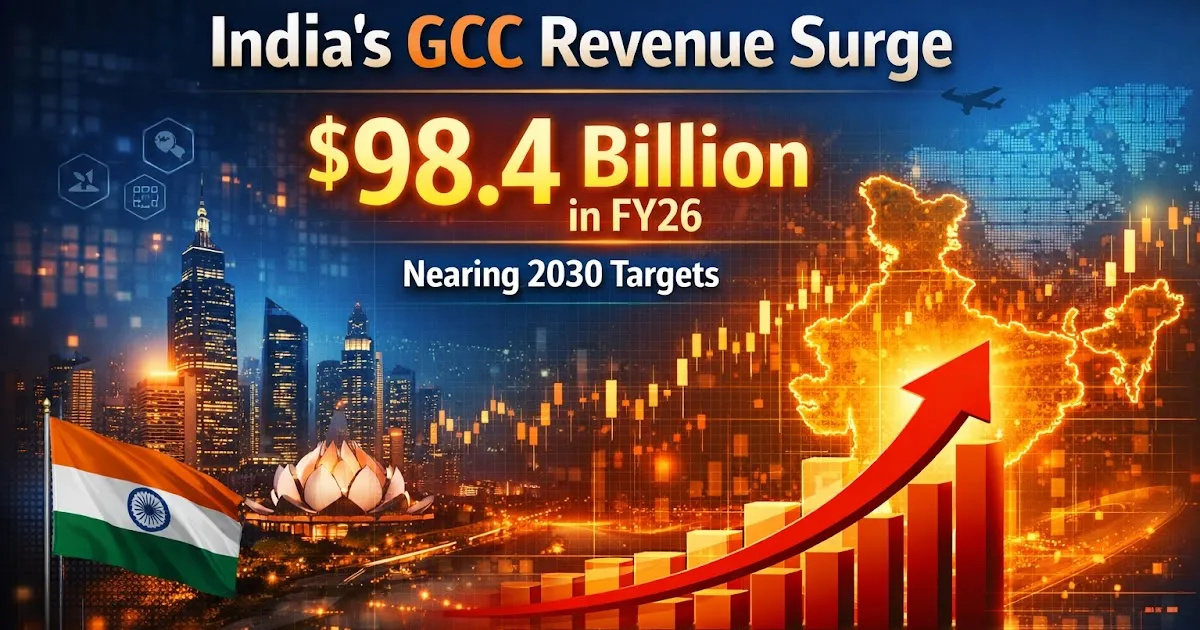
India’s offshore tech centers, or GCCs, generated $98.4 billion in FY26 revenue, nearly four years ahead of the $99–105 billion 2030 projection. The ecosystem now includes 2,117 GCCs and 2.36 million employees, up 32% since FY21, fueled by AI-first mandates and strategic relocation as visa and geopolitical pressures rise.
Accenture has leased more than 600,000 sq ft at Phoenix Millennium Towers in Baner, Pune, for a new Global Capability Centre on a 15-year deal valued at about ₹325 crore. Operations are expected by June 2026, in two phases. The move signals intensifying GCC competition in India as multinationals scale AI, cloud, and digital transformation hubs across cities.
CG Offices says it is scaling quickly, doubling revenue and targeting Rs 100 crore in the next two years. Fueled by rising demand for sustainable, high-quality workplaces, the company is expanding beyond space provisioning into a full-stack workplace partner. The strategy mirrors a broader industry shift toward integrated office design, management, and operational support under one roof.
Infosys has secured a deal worth over $500 million from US bank Truist Financial to establish and operate a global capabilities centre in Hyderabad. The centre will support roles from sales, HR and finance to IT, hiring up to 4,500 people. Built on a five-year built-operate-transfer model, Infosys plans to make it AI-first using its Topaz platform.
Never miss a story
Set alerts for the topics and sources you care about. Download Beige for free.
Gulf leaders gathered in Saudi Arabia to coordinate responses to missile and drone attacks attributed to Iran, with tensions rising after Tehran targeted U S military installations in the Gulf. The meeting comes as Iran disrupts navigation around the Strait of Hormuz, keeping global shipping and regional security on edge and prompting urgent discussion across GCC capitals.
Even without tariffs, Trump’s unpredictable trade moves are unnerving clients and disrupting Indian IT’s expansion rhythms. GCC plans are being slowed as firms prepare contingencies, while worries over optics, rising costs, and potential work shifts toward Southeast Asia keep the sector tense. The result is a cautious, back-foot posture that could linger.
India’s Global Capability Centres are facing a widening AI and data skills shortage, estimated at 38–42%. The gap is proving to be a major bottleneck for GCC growth as demand spikes for generative AI and MLOps. With supply lagging, companies are increasingly relying on contractual hiring to plug critical roles and keep delivery timelines on track.
Table Space has expanded its managed office portfolio in Maharashtra by adding 425,000 sq ft across Pune and Navi Mumbai. The move strengthens its regional presence to 2.6 million sq ft, with Pune sites in Wakad, Yerwada and Koregaon Park. The expansion is tied to rising GCC demand fueling demand for turnkey office space.
Reading on mobile?
Open Beige in the app for a smoother experience — free on iOS and Android.
India’s GCC boom is accelerating, with over 1,700 global capability centres now operating nationwide and expanding beyond traditional IT hubs. While Bengaluru has long led as a magnet for these jobs, newer competitors are emerging as states and even real-estate firms pursue GCC investment. The question is whether Bengaluru can keep its edge as the hunt spreads to cities like Bhopal and Jaipur.
Global capability centres in India are expanding rapidly, but recruitment is changing fast. Replacement hiring now makes up around 40% of hiring in Q4, pushed by Gen Z employees staying for shorter tenures. Companies are recalibrating to keep operations stable while growth continues. At the same time, demand for AI and platform engineering talent is rising, while talent shortages remain a major hurdle.
A TeamLease report says India’s GCC ecosystem is expanding rapidly, with over 1,800 GCCs now contributing 55% of the world’s total, employing 1.9 million professionals, and earning $64.6 billion in export revenue in FY25. It projects 2.8–4 million more jobs by FY30, while flagging sharply increasing compliance demands for GCC operators.
India’s GCC sector is grappling with a widening gap in specialized skills while talent increasingly moves to newer hubs offering higher packages. Younger professionals are also choosing roles with purpose and fast-changing work environments, pushing GCCs to overhaul hiring and retention strategies. Remote work and GCC expansion into Tier-II and Tier-III cities are adding fresh complexity—forcing more employee-centric approaches to win the talent war.
Follow your favourite sources
Track sources, tags and categories — all in the Beige app.
Swipe through stories, personalise your feed, and save articles for later — all on the app.