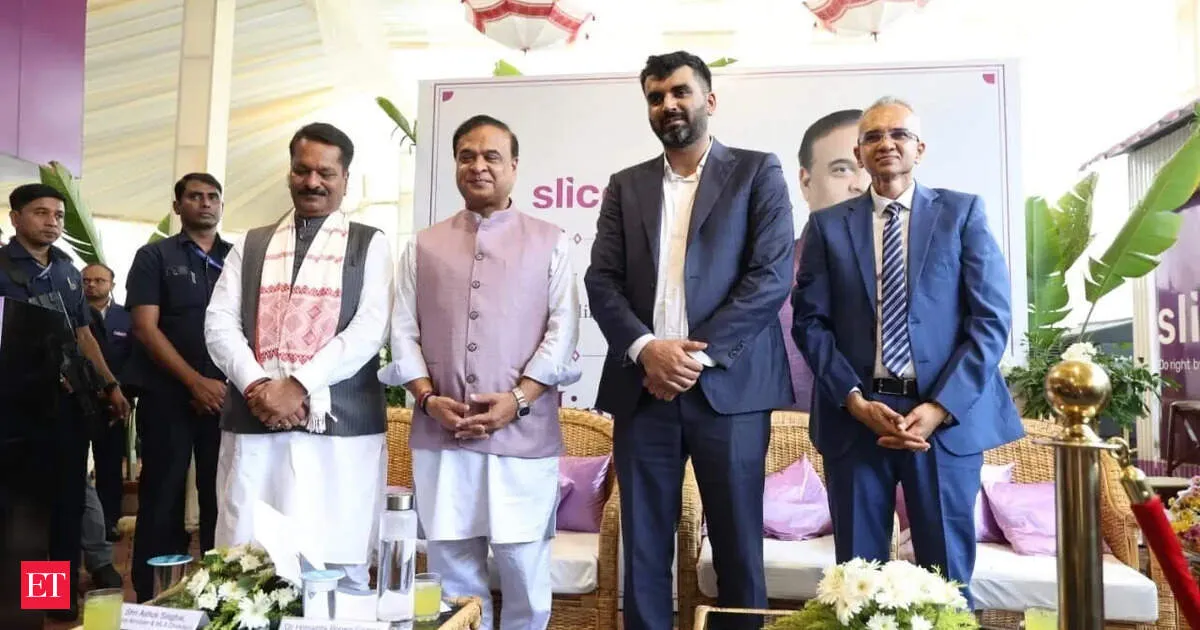
Assam Chief Minister Himanta Biswa Sarma inaugurated Slice Small Finance Bank’s India-first AI-powered “phygital” branch in Guwahati on GS Road. The next-generation banking setup blends physical trust with digital convenience using AI-enabled self-service kiosks, paperless cash deposits and withdrawals, and streamlined digital onboarding. The bank expects to expand access to responsible credit, savings and payments for individuals and small businesses, especially underserved communities, by pairing AI-driven convenience with trusted in-person support. Sarma said it reflects Assam’s readiness for technology-driven banking.
India has brought millions into the formal financial system through bank accounts and digital payments, but a new study highlights a deeper problem: household financial maturity. Many families struggle with basics like compounding and inflation, limiting their ability to choose products and plan effectively. Closing this knowledge gap could unlock more inclusive growth and stronger long-term outcomes.
Your news, in seconds
Get the Beige app — every story in 60 words, updated hourly. Free on iOS & Android.
Financial services secretary M Nagaraju reviewed progress on financial inclusion schemes with public sector and major private banks, urging them to expand digital infrastructure for stronger last-mile reach. The focus is to improve access for underserved communities, moving services beyond physical branch networks by widening connectivity and adoption of digital financial tools.
India’s first time borrower base has climbed to 4.4 crore, signalling stronger credit growth and faster financial inclusion even as lenders tighten lending norms. Reports say women’s participation is rising sharply, and consumer durable loans are the main entry route. Despite tougher scrutiny, many of these new borrowers show solid repayment discipline, pointing to scalable opportunities in emerging and younger demographics.
The Finance Ministry will review progress on financial inclusion this week as it drafts the next phase, Financial Inclusion 2.0. Officials are expected to assess how current schemes are performing, with programs like the Atal Pension Yojana coming under closer scrutiny to decide what to expand, fix, or redesign for broader access and stronger outcomes.
The RBI has eased branch opening rules for NBFCs, giving gold loan lenders more flexibility to expand their physical footprint. The change is expected to improve the speed and availability of credit for small businesses, farmers, and households, strengthening India’s credit architecture and backing more inclusive, steady economic growth.
Never miss a story
Set alerts for the topics and sources you care about. Download Beige for free.
An estimated 3 million bottom-of-the-pyramid borrowers have lost access to formal financing over the past nine months, raising concerns that regulatory tightening is diluting India’s financial inclusion push. The shift appears to be hitting lower-income borrowers hardest, potentially reversing gains made by fintech and lenders in expanding credit access to underserved communities.
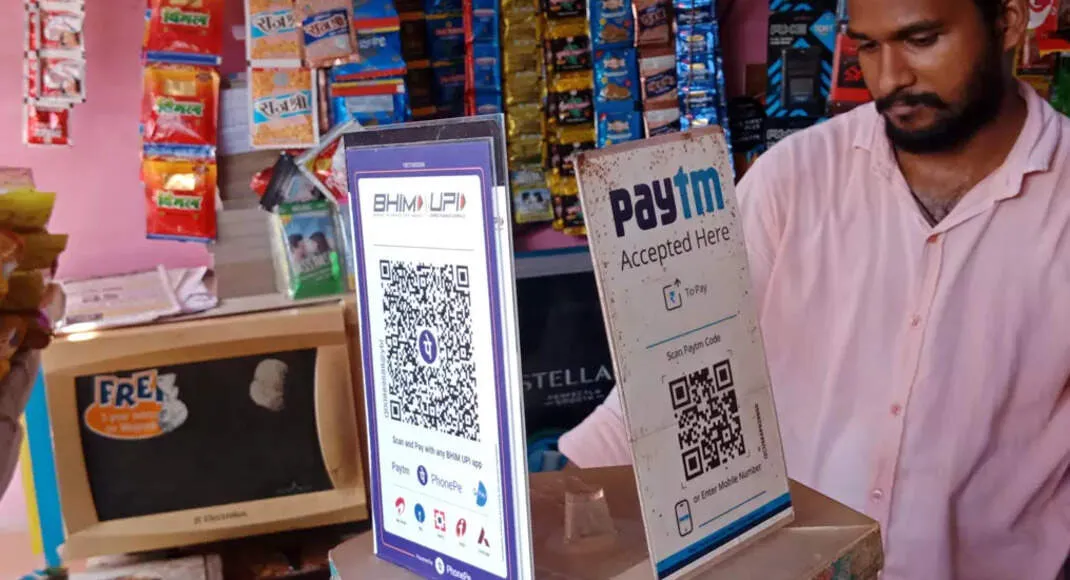
A surprising gap is emerging: India’s wealthiest states are moving to cashless payments more slowly, even as UPI adoption accelerates in many others. States such as Tamil Nadu and Andhra have led digital-payment growth, while Gujarat, Karnataka, and Delhi lag. The paradox points to how prosperity can shape payment habits differently than expected.
Sebi has proposed a Gift PPI framework that lets people gift prepaid instruments usable only to buy mutual fund units. The regulator says this can broaden access, pull in first-time investors, and shift gifting away from consumption toward investment. However, the plan comes with tight limits and compliance requirements to keep the system controlled.
India’s government is considering the next wave of amalgamation among regional rural banks, entering a fourth phase of mergers. The move is intended to strengthen the banking network, improve efficiency, and make smaller lenders more resilient—while raising questions about how services and customers will be impacted in far-flung areas.
Reading on mobile?
Open Beige in the app for a smoother experience — free on iOS and Android.
Suzlon Energy has signed an initial pact with Korean firm GS E&C to partner on India’s renewable energy push, targeting project development and optimization of solutions. The agreement also includes cooperation with Arie Energy LLP on wind farm repowering projects. Separately, AFINIT and Yes Bank inked an MoU aimed at improving financial inclusion.
Swipe through stories, personalise your feed, and save articles for later — all on the app.