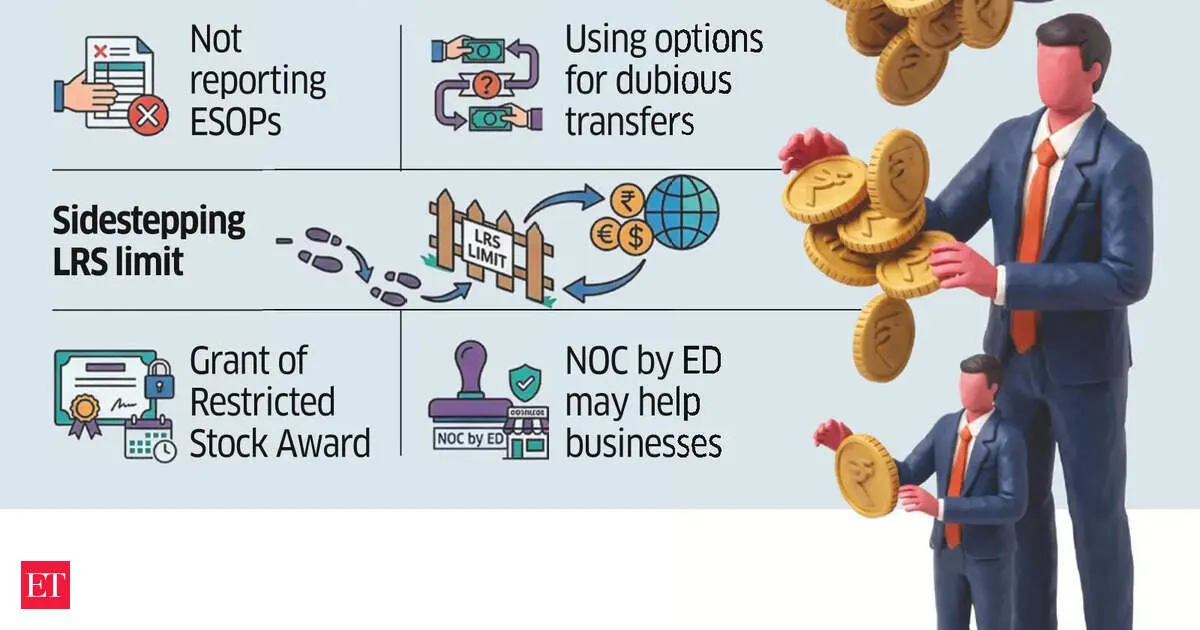
The Enforcement Directorate has begun probing employee stock options (ESOPs) offered by foreign firms to Indian workers. The investigation focuses on whether such ESOPs were misused to launder money and circumvent foreign remittance rules. Experts warn that fake or manipulated ESOP arrangements could help hide overseas funds or push remittances beyond permissible limits.
A new one-time amnesty scheme, FAST-DS, has been launched for Indian residents and NRIs to address past non-compliance in reporting foreign assets, including US stocks received via ESOPs. The move targets missed or inadvertent disclosures and seeks to reduce penalties and litigation under India’s Black Money Act, offering clearer resolution for taxpayers who previously got it wrong.
Your news, in seconds
Get the Beige app — every story in 60 words, updated hourly. Free on iOS & Android.
An employee was slapped with a Rs 10 lakh penalty for failing to disclose foreign ESOPs in his ITR. But the ITAT Chennai set aside the order, holding the omission was accidental and bona fide, especially since it was the first year the reporting requirement applied. The case highlights how intent and reporting context can swing tax penalties.
India has eased parts of its foreign direct investment framework, allowing companies to offer ESOP stock options to employees in China, Nepal, and Hong Kong. At the same time, NRIs and expats located in these regions can invest directly in Indian stocks. The adjustment to rule PN-3 is designed to make hiring and talent management easier, especially for firms with overseas teams.
Swipe through stories, personalise your feed, and save articles for later — all on the app.