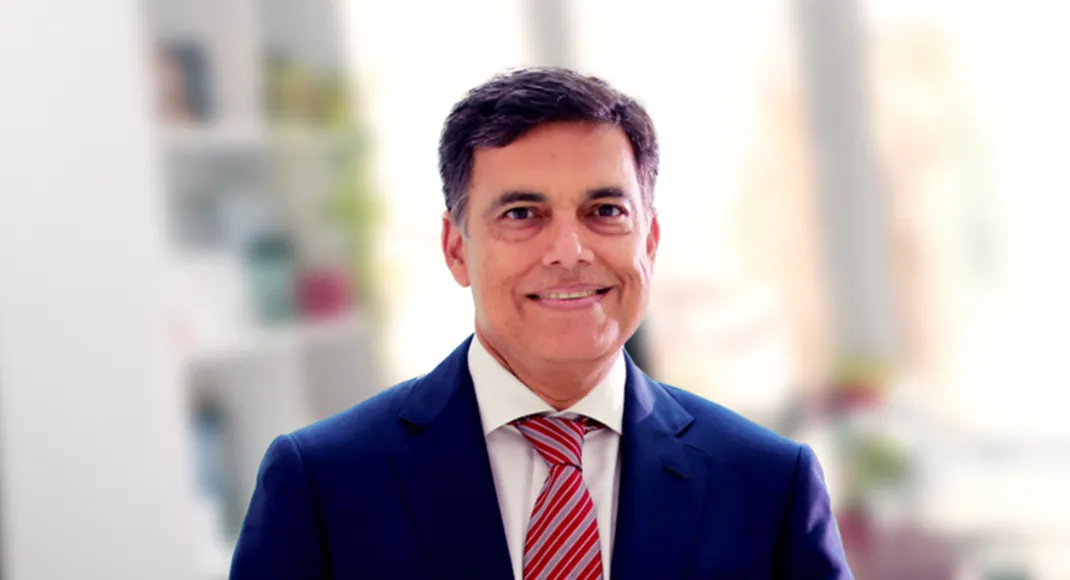
Prime Minister Narendra Modi’s calls to curb energy use are being read by investors as a response to an unusually persistent oil shock. JPMorgan’s Sanjay Mookim says the crude price rise is hitting India’s external balance directly, with higher oil costs not yet fully passed to consumers, leaving government and companies to absorb much of the burden. The tougher effect, he warns, may surface in Q1 FY27 as demand tapers and capex momentum slows, shifting flows toward defensives.
In April, Indian mutual funds increased cash holdings by over Rs 12,700 crore, taking total cash to about Rs 1.98 lakh crore, despite a strong market rebound. While some fund houses added to their cash buffers, others cut back, signaling uneven positioning across the industry. SBI Mutual Fund emerged as the biggest cash holder among peers.
Your news, in seconds
Get the Beige app — every story in 60 words, updated hourly. Free on iOS & Android.
In April, Indian mutual funds poured Rs 30,600 crore into equities, ramping up positions in ICICI Bank, SBI and Sun Pharma. At the same time, they cut exposure to Wipro, HDFC Bank and Hindalco across large, mid and smallcap categories. The reshuffling signals active portfolio management as fund managers reposition for changing market expectations.
Equity mutual fund inflows dipped 5% to Rs 38,440 crore in April, but buying remained broad across categories. Flexi cap funds posted their highest-ever monthly inflow, while smallcap and midcap also attracted strong money. Sectoral and thematic funds, however, saw moderation as investors grew more selective amid market volatility.
Bajaj Auto has announced its biggest share buyback, worth Rs 5,633 crore, priced at Rs 12,000 per share—a premium for existing shareholders. The offer includes a reserved portion for retail investors and promoters are reportedly not participating, which could impact who gets shares. The move also reflects management confidence in cash generation, but investors should wait for the record date and letter of offer before deciding.
FII ownership in Indian equities has fallen to 14.7%, the lowest since June 2012, down from 19.9% in April 2016. Despite the foreign pullback, markets have been supported by domestic investors, with DII participation rising sharply by 18.9%, according to JM Financial’s Fundamental Research report.
Never miss a story
Set alerts for the topics and sources you care about. Download Beige for free.
Foreign investors extended their sell-off in Indian equities into the second half of April, with financials taking the hardest hit. The outflows were linked to the sector’s large weight in markets and rising inflation concerns. Meanwhile, power and capital goods saw notable inflows, supported by strong demand and supportive global trends.
Market expert Rajeev Agrawal says global equity flows are increasingly concentrated in AI-related winners, notably semiconductor-heavy economies like Korea, while India’s exposure remains limited. He also flags the impact of higher crude oil and West Asia geopolitical tensions, though he expects gradual easing. For investors, he prefers domestic-oriented Indian cyclicals, especially renewable energy and financials, for steadier returns.
The Nifty Smallcap 100 jumped 18.4% in April, marking its third-biggest monthly gain since launch. Market history hints that this momentum can extend over the next 12 months, but analysts warn upside may be limited by richer valuations. Still, many experts expect small-cap outperformance over 18-24 months, despite the current valuation gap versus past cycles.
Individual investors trimmed direct equity exposure for a third straight quarter, even as mutual fund holdings climbed to an all-time high. The shift was powered by strong retail inflows into MFs. At the same time, foreign ownership slid to a 14-year low amid risk-off sentiment, while domestic institutional holdings rose to a fresh peak.
Reading on mobile?
Open Beige in the app for a smoother experience — free on iOS and Android.
Foreign institutional investors turned cautious markets into an opportunity, increasing holdings in 54 beaten-down smallcap stocks during the March quarter. While broader sentiment stayed wary, FIIs leaned into a “buy the dip” strategy, stacking capital in stocks they view as temporarily mispriced but structurally sound. The push also stood out because some other smallcaps saw exits instead.
For the first time in India, investment demand for gold overtook jewellery consumption in the March quarter, hitting 82 metric tons versus 66 metric tons. The change is linked to muted equity market returns and rising gold prices, lifting gold’s share to 54.3% of total consumption as overall demand climbed 10.2% to 151 tons.
Brokerages are taking a selective approach in markets: Motilal Oswal has maintained a buy view on UTI AMC, citing steady AUM growth and healthy SIP inflows, as well as a bullish stance on Aditya Birla Sun Life AMC. In contrast, Goldman Sachs downgraded Dr Reddy’s Laboratories, pointing to weak pipeline visibility, pricing pressure, and limited near-term growth.
Since Zomato’s mid-2021 listing ignited India’s startup IPO wave, more than 30 mostly unicorn companies have gone public. Together, they’ve unlocked about USD105 billion in market value over the past four years. ET Prime now tracks who actually benefited the most from this unprecedented value creation—from early stakeholders to public-market entrants.
Follow your favourite sources
Track sources, tags and categories — all in the Beige app.
Median compensation for professional CEOs in India climbed 5% year-on-year to ₹10.5 crore in FY26, according to a Deloitte report. The increase is the slowest since the pandemic, with analysts linking the moderation to weaker equity market performance and mounting geopolitical risks that are making boards more cautious on pay.
Indian mutual funds have ramped up investments in several new-age companies including Urban Company, Ather Energy, Lenskart, Meesho, and PhysicsWallah. The inflows signal rising confidence from domestic investors in tech-led growth stories. Brokerages are also starting coverage with upbeat views, pointing to a broader shift of institutional capital toward India’s next-gen economy.
JSW Infra’s INR1,200-crore acquisition of three promoter firms has drawn scrutiny as the company claims it gains quicker access to railway permits and rakes under schemes that are currently under a moratorium. Analysts, however, argue the listed entity could have built the same capacity independently, potentially avoiding costs of more than INR500 crore.
Despite markets being about 10% down, March SIP inflows hit a record roughly INR 32,000 crore, underscoring retail’s scale in Indian equities. But fund managers caution that if investors fail to see returns for another 18 months, many could reduce or withdraw SIPs—potentially reshaping demand and market sentiment.
Stay informed on the go
Bite-sized news from 100+ trusted sources, right in your pocket.
Arohan Financial Services is in the final stretch to file its DRHP for a Rs 1,400 crore IPO that combines a fresh issue with an offer for sale. The move comes as microfinance conditions improve, with asset quality strengthening, loan portfolios recovering, and growth outlook looking steadier—fueling renewed investor interest.
Swipe through stories, personalise your feed, and save articles for later — all on the app.