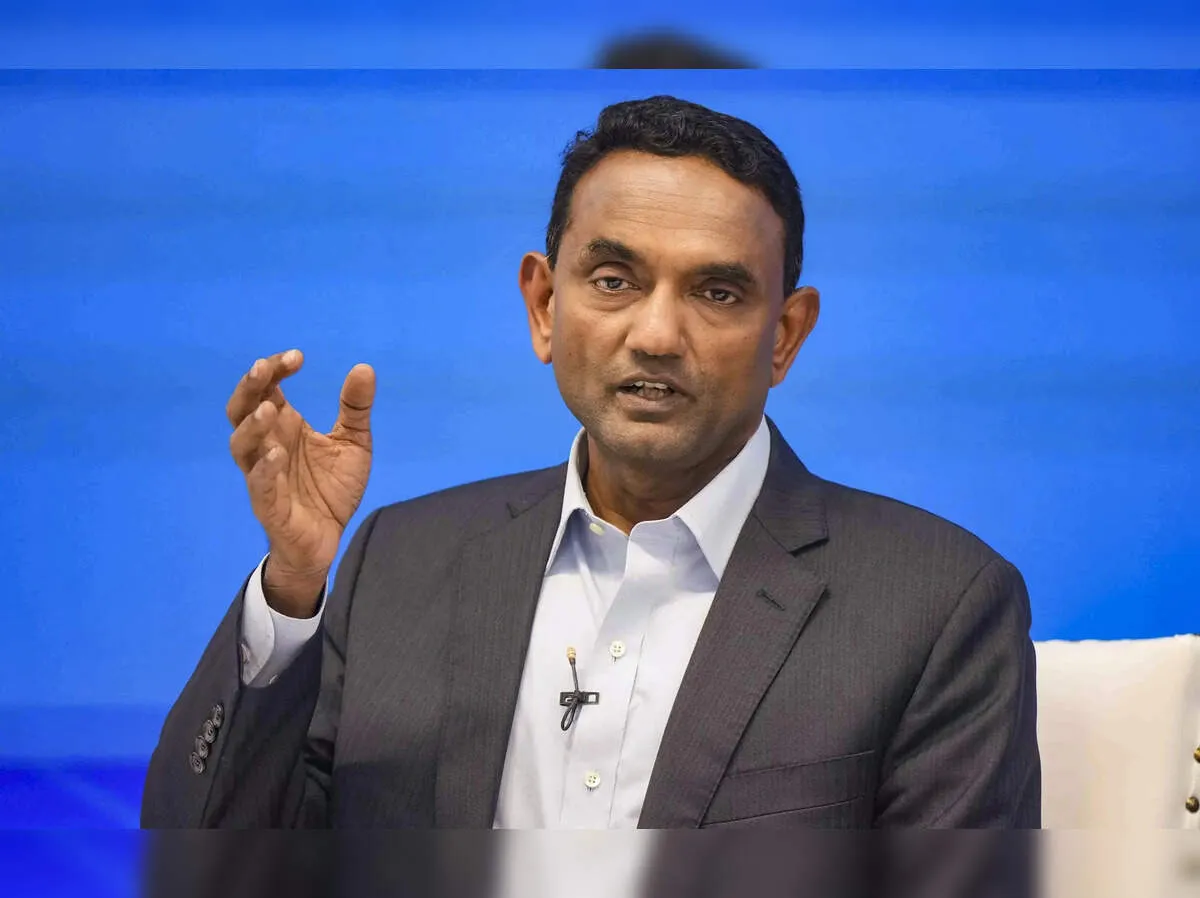
TCS says FY26 became an “inflection point” for enterprise AI, shifting buyers from pilots to scaled deployments. CEO Krithivasan targets global leadership in AI-led technology services, with 130 of its 139 largest clients—those earning over $50 million annually—already using TCS as their AI partner. The firm is rapidly upskilling, with 270,000+ employees holding advanced AI skills. It’s also expanding AI infrastructure in India, including a HyperVault plan to build 1GW of data centre capacity.
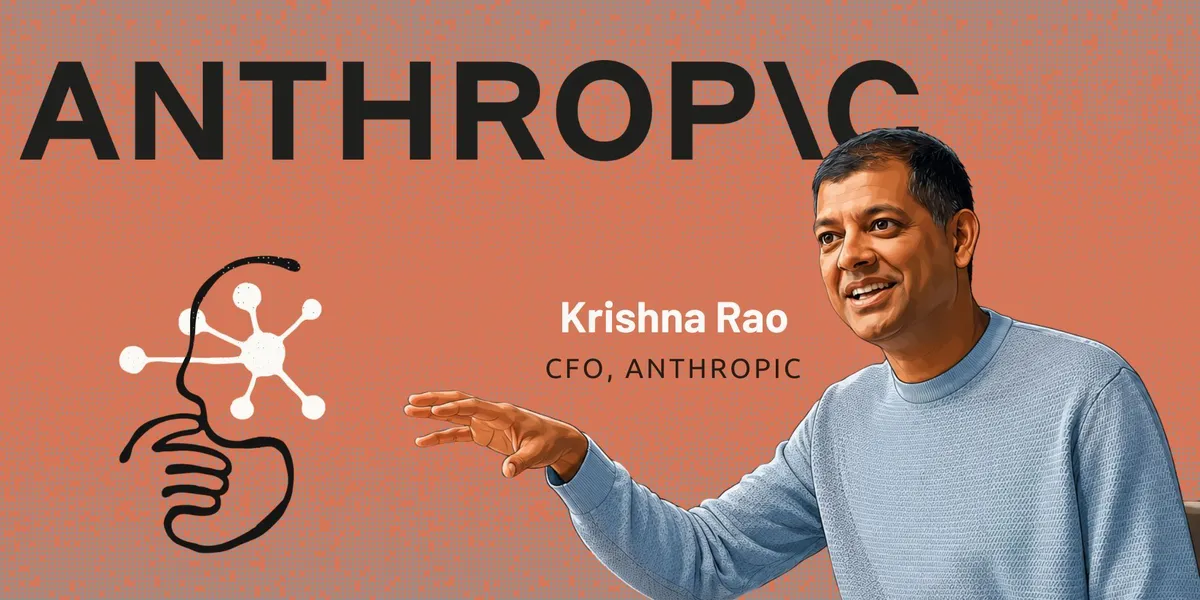
In a first podcast appearance, Anthropic CFO Krishna Rao lays out how the AI lab scaled from about $250M in run-rate revenue two years ago to roughly $30B by early 2026—driven by a ruthless “compute” strategy. He describes long-horizon planning, multi-vendor chip bets across Trainium, TPUs, and GPUs, and why interpretability and safety research is now boosting enterprise trust and retention.
Your news, in seconds
Get the Beige app — every story in 60 words, updated hourly. Free on iOS & Android.
New figures show Anthropic has pulled ahead of OpenAI in enterprise AI spending, with 34.4% of surveyed companies paying for Anthropic products in April. The jump is attributed mainly to growing demand for Claude Code, Anthropic’s AI coding assistant. The result suggests a faster, tool-driven shift in how businesses are choosing their next AI vendor.
For the first time, more U.S. businesses are paying for Anthropic’s Claude than for OpenAI’s ChatGPT, according to Ramp’s AI Index. Adoption jumped to 34.4% for Anthropic while OpenAI slipped to 32.3%. Yet Ramp flags three threats: runaway token costs, compute and reliability strain, and cheaper competition from open source and Codex.
A startup behind AI IQ is converting dozens of frontier language models into an estimated human-style IQ, complete with an added “emotional intelligence” score and cost-performance views. The charts are praised for clarity, but slammed for implying precision from uneven, “jagged” capabilities and for methodological choices critics say may skew results. Meanwhile, enterprises are using the framework to route models by task and price.
Anthropic has reached a milestone: for the first time, it has more verified business customers than OpenAI, according to Ramp’s latest AI Index. The fintech data suggests enterprise adoption may be shifting faster toward Anthropic than OpenAI, offering a new signal of momentum in the competitive race for corporate AI usage.
Never miss a story
Set alerts for the topics and sources you care about. Download Beige for free.
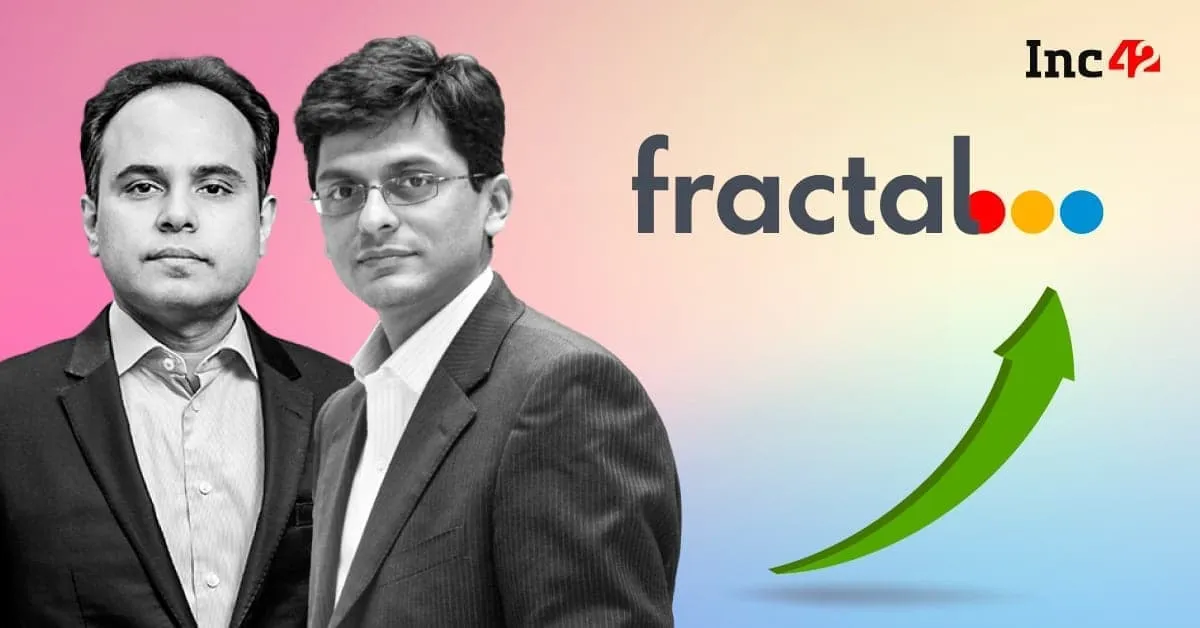
Fractal Analytics reported a sharp jump in Q4 net profit to Rs 116 crore, more than doubling year over year on improved margins. CEO Srikanth Velamakanni pointed to accelerating enterprise AI demand, arguing the opportunity is still largely untapped and that outcome-driven models are helping win new business.
Fractal is betting big on enterprise AI even as weak TMT demand drags part of its business. The analytics firm says banking and life sciences are surging, with growth of 40% and 80% respectively, while overall revenue still rose 19%. Client retention averages 112%, pointing to sticky partnerships and continued AI adoption.
OpenAI has launched the OpenAI Deployment Company to help businesses build and deploy reliable AI for mission-critical daily operations. The venture will send Forward Deployed Engineers to work with executives, operators, and frontline staff to identify where AI can have the biggest impact. With more than $4 billion invested and a planned acquisition of applied AI firm Tomoro, OpenAI aims to speed up time from choosing use cases to production rollout.
GM has reportedly laid off hundreds of IT employees while moving to recruit candidates with stronger AI capabilities. The company’s postings emphasize AI-native development, data engineering and analytics, cloud engineering, and work tied to agent and model development. It also highlights prompt engineering and new AI workflows, signaling a rapid redesign of parts of its tech team around machine-focused skills.
Reading on mobile?
Open Beige in the app for a smoother experience — free on iOS and Android.
Fractal Analytics’ shares hit a BSE all-time high after Q4 profit more than doubled, with net profit rising 109% YoY and revenue up 17% to ₹886.3 crore. For FY26, profit grew 30% and gross margin expanded to 47%. The company is restructuring around enterprise AI, lifting R&D, while emphasizing margin-first growth despite sector concentration risks.
OpenAI has launched the OpenAI Deployment Company (DeployCo) with $4 billion in initial funding and acquired AI consulting firm Tomoro, adding about 150 engineers. The new unit will embed deployment specialists inside client organizations to redesign workflows and scale AI with measurable productivity outcomes. OpenAI frames deployment as the path to safe, effective, enterprise-wide impact.
Anthropic unveiled “dreaming,” a new capability in its Claude Managed Agents that reviews an agent’s past sessions and curates reusable playbooks so performance improves over time. The company also put “outcomes” and multi-agent orchestration into public beta, aiming to make AI agents more accurate, self-correcting, and scalable for real enterprise work.
Sakana AI says its RL Conductor turns a small 7B model into an “orchestra conductor” that dynamically routes tasks across GPT-5, Claude Sonnet 4, Gemini 2.5 Pro, and open-source workers. Instead of hardcoded pipelines like LangChain, it learns coordination via reinforcement learning—cutting tokens and API calls while boosting reasoning and coding benchmark scores. The tech now powers Sakana Fugu’s enterprise API.
Follow your favourite sources
Track sources, tags and categories — all in the Beige app.
Anthropic and OpenAI are moving beyond selling models, now offering end to end enterprise AI services. With large new investments, they are embedding engineers directly with customer teams to design, deploy, and manage custom AI systems. The shift threatens traditional work for India’s TCS, Infosys, and Wipro, but also opens fresh partnership routes for firms that can integrate AI faster and better.
OpenAI and Anthropic are reportedly in talks to acquire companies that provide AI services to businesses. The aim is to bring in hundreds of engineers and consultants who can help enterprises integrate AI models into day-to-day operations. If the deals proceed, it signals a shift from building models alone toward accelerating real-world deployment and competing harder for market share.
Pinecone says the classic RAG-to-vector pipeline fails for agentic AI, where tasks require reassembling context across sources and sessions. The company’s Nexus shifts reasoning to a compilation stage, creating persistent, task-specific knowledge artifacts, plus KnowQL for declarative agent queries. An internal benchmark claims a 98% token reduction, aiming at deterministic grounding and governance-ready outputs.
Sierra has raised $950 million, giving it more than $1 billion in available capital as competition intensifies in enterprise AI. The company says it will use the funds to establish itself as the “global standard” for AI-powered customer experiences, aiming to scale products and partnerships faster than rivals.
Stay informed on the go
Bite-sized news from 100+ trusted sources, right in your pocket.
Anthropic and OpenAI are ramping up enterprise AI ambitions by partnering with asset managers. The new joint-venture push aims to broaden distribution and accelerate sales of their business-focused AI tools. Instead of relying only on direct enterprise outreach, both firms are leveraging finance-industry relationships to reach decision-makers faster and scale adoption across corporate and institutional buyers.
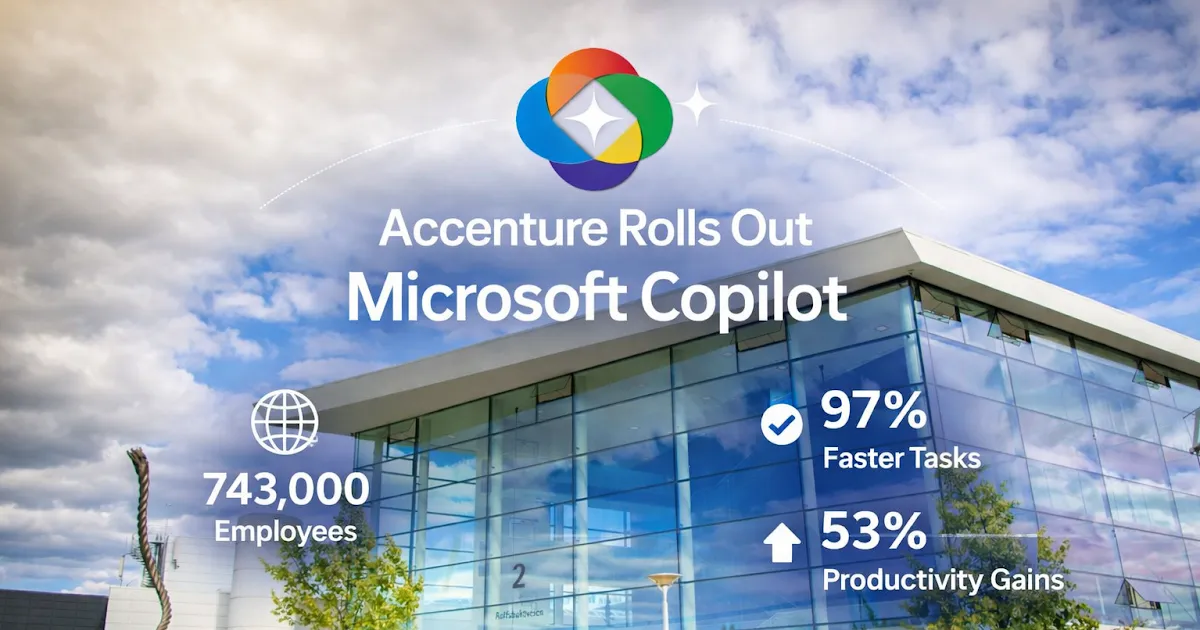
Accenture has deployed Microsoft Copilot to its entire global workforce of about 743,000 employees, calling it the biggest enterprise AI rollout to date. The company reports that 97% of surveyed employees finish routine tasks faster, while 53% cite meaningful productivity improvements. Copilot is built into Microsoft apps like Word, Excel, Outlook, Teams, and SharePoint, with pilot usage climbing to 89% monthly active.
Swipe through stories, personalise your feed, and save articles for later — all on the app.