India kicked off the new fiscal year with a broad-based consumption lift despite West Asia war tremors. April GST collections hit a record, passenger car sales rose sharply, and UPI-driven digital transactions expanded strongly. Together, these indicators point to resilient consumer and spending momentum, suggesting limited immediate fallout from the conflict—at least for now.
India’s economy could keep expanding above 7 percent a year even if crude oil stays elevated at about USD 90–100 per barrel, according to Assocham. The industry group points to historical patterns showing consumption-driven resilience and expects growth to remain strong through 2026–27, despite some global forecasts calling for a slowdown.
Your news, in seconds
Get the Beige app — every story in 60 words, updated hourly. Free on iOS & Android.
Finance Minister Nirmala Sitharaman said India’s growth is being sustained by domestic consumption and that predictable policy support is crucial to keep GDP momentum steady. She also flagged work underway to review the “open architecture” framework for banks selling third-party products, stressing that even as digitalization accelerates, banks must prioritize strong customer connect.
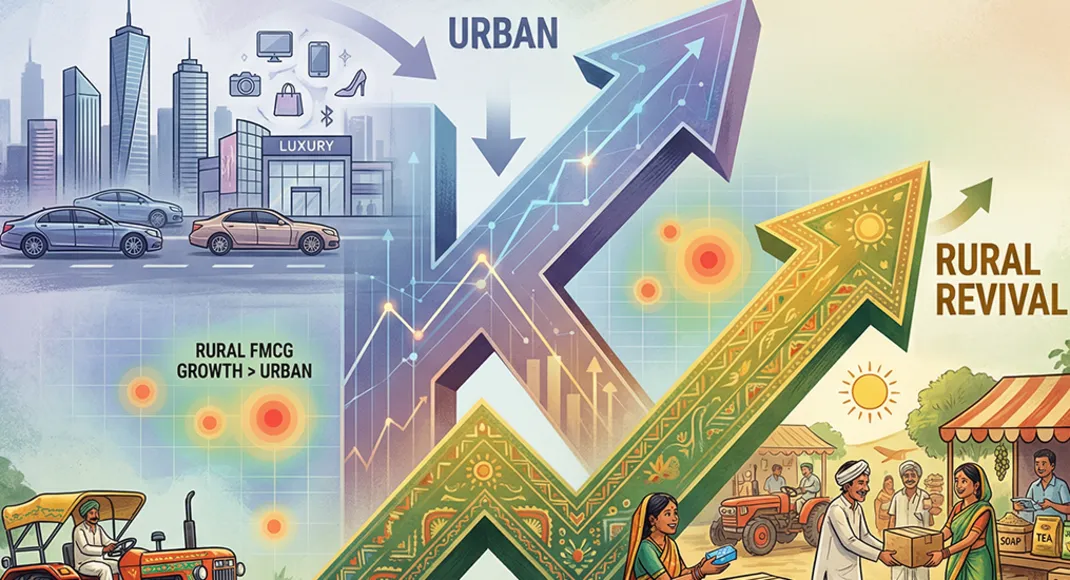
India’s post-pandemic K-shaped recovery is losing its sharp divide as rural demand begins to grow faster than urban momentum. The change is being powered by everyday FMCG consumption and welfare-linked spending, while urban markets mature. With city growth becoming more steady, the next mass-consumption wave appears increasingly rooted in India’s hinterlands.
Swipe through stories, personalise your feed, and save articles for later — all on the app.