The Technology Development Board (TDB) has begun disbursing the first tranche of India’s Rs 1 lakh crore Research and Development Initiative (RDI) fund, aimed at accelerating deeptech innovation with minimal government interference. TDB expects to release Rs 500–600 crore this fiscal year through investments sized from Rs 3 crore to Rs 100–150 crore per project. It has selected 22 projects so far across drones, spacetech, advanced batteries and biotech, including Rs 50 crore for indigenous cell therapies and Rs 105 crore for a modular satellite platform.
AI drug discovery company Isomorphic Labs has raised a staggering $2.1 billion in funding led by Thrive Capital, with support from Google-backed momentum. The fresh cash is set to expand its AI drug design engine and push timelines for early clinical testing, now expected to start by late 2026, as the company targets faster routes to treating disease.
Your news, in seconds
Get the Beige app — every story in 60 words, updated hourly. Free on iOS & Android.
Alphabet’s AI drug discovery venture, Isomorphic Labs, is reportedly close to raising over $2 billion in a round led by Thrive Capital. The fresh capital would strengthen its drug design engine and support rapid global expansion, highlighting how Alphabet is doubling down on high-stakes AI bets beyond search and ads.
IPL 2026 is showing a sharp split: linear TV ratings are down 18.8% in the first half, while digital engagement continues to climb as younger viewers switch to mobile-first clips and connected TV. In biotech, Bengaluru and Delaware startup LiteFold is building an “AI co-scientist” aimed at compressing computational biology and legal workflow steps, skipping only the wet lab.
Naked mole rats are famous for surviving long lives and resisting cancer, and researchers point to a protective molecule called HMW-HA. In a key experiment, scientists added the gene that produces HMW-HA into mice. The result: longer lifespan and lower inflammation, raising hopes that similar approaches could slow human aging and improve health.
Mark Zuckerberg backed Cellular Intelligence has acquired Novo Nordisk’s Parkinson’s cell therapy after the Danish drugmaker shut down its cell therapy unit last October. Novo Nordisk said the restructuring meant discontinuing development of the therapy. The deal signals renewed interest in the approach and could reshape the therapy’s next development and commercialization plans.
Never miss a story
Set alerts for the topics and sources you care about. Download Beige for free.
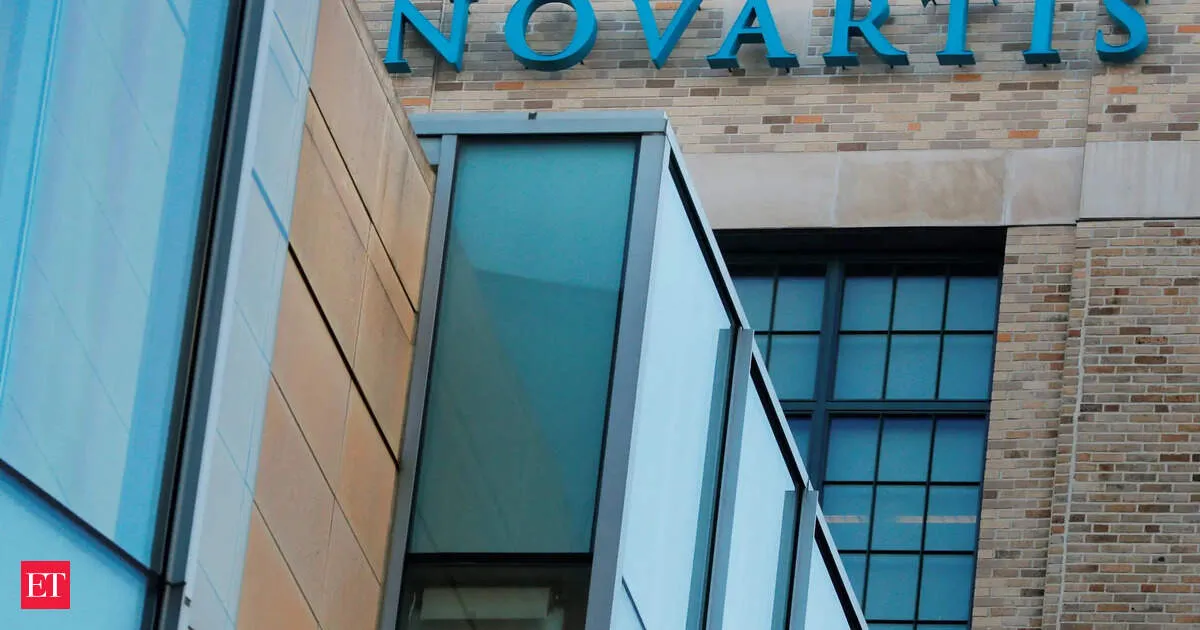
Novartis says it is expanding how India contributes to its global drug development. The company is shifting more early stage research to India while doubling down on innovative medicines. With plans to bring additional new medicines to market soon, the move signals deeper long term commitment to India’s healthcare ecosystem and its workforce.
Odyssey Therapeutics, an autoimmune disease-focused biotech, surged 11.1% in its Nasdaq debut to a $899.9 million valuation. The company raised $279 million in its IPO, surpassing its target, a result that points to renewed investor appetite for biotech listings. Founder Dr. Gary D. Glick’s track record adds extra confidence to the story.
Guardant Health plans to launch a new blood-based multi-cancer test in India developed with Zydus Lifesciences. Designed for earlier detection, it can target cancers including lung, breast, and prostate. The move comes as India faces a high cancer burden alongside low routine screening rates, aiming to make screening more accessible and prompt.
Kiran Mazumdar-Shaw has named her niece Claire Mazumdar as her successor at Biocon, launching a gradual leadership transition. The founder, who built the biotech company from a garage into a global player, will remain involved while Claire—positioned as a more science-driven leader—takes on increasing responsibility during the handover period.
Reading on mobile?
Open Beige in the app for a smoother experience — free on iOS and Android.
ICMR’s chief says India should chart its own path for rare disease treatment instead of relying on conventional Western approaches. The focus is on local innovation and smarter use of limited resources to create care strategies tailored to India’s realities. The shift signals a move toward indigenous solutions and more efficient, context-specific healthcare planning for patients with rare conditions.
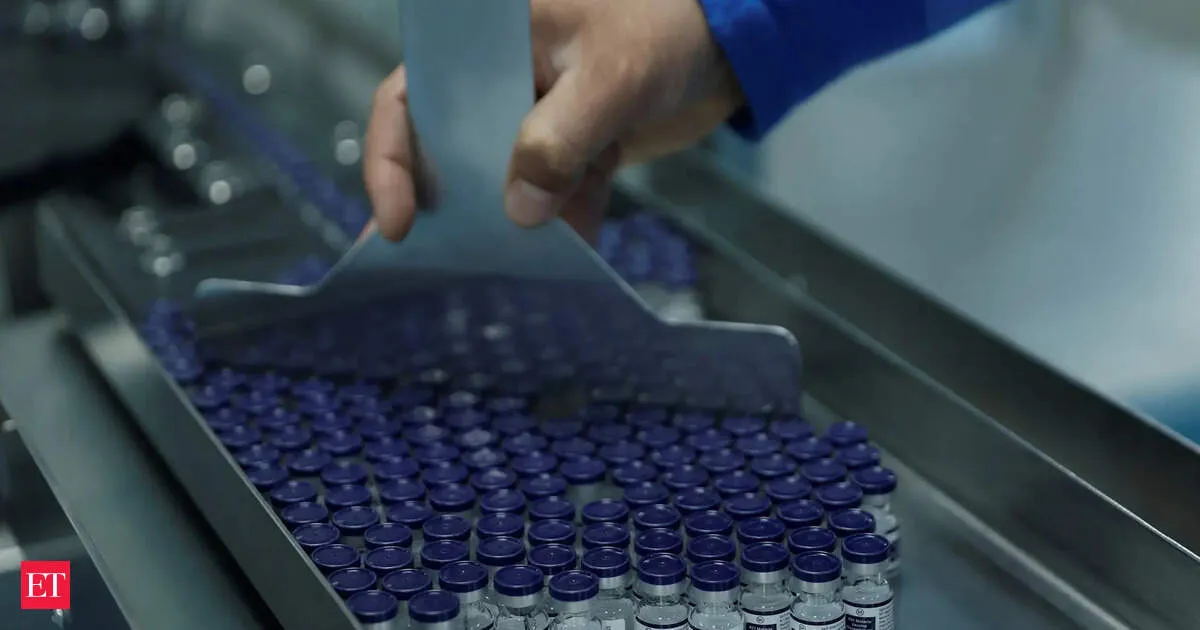
Wockhardt shares jumped around 9% after the pharma firm reported a strong March-quarter turnaround. Net profit returned to positive territory as revenue rose sharply, and full-year earnings improved too. Biotech operations drove much of the momentum, supported by expansion across emerging markets. The company also said its pipeline grew through new filings and approvals.
Moderna’s first-quarter revenue topped expectations, powered largely by strong international COVID-19 vaccine sales. While the company expects lower-than-anticipated revenue in Q2, it is betting on longer-term growth, targeting a major slice of Europe’s respiratory vaccine market. Its mCombriax launch is planned for 2027, shifting investor focus beyond COVID.
Lord’s Mark Industries has won Central Licensing Authority clearance for its LordsMed HIV 1&2 Self Test, joining a limited group of just nine global companies with Class D in-vitro diagnostic self-test approval. Exports are slated to start in June 2026 to Africa, the EU and South America, with the firm targeting major international markets.
Follow your favourite sources
Track sources, tags and categories — all in the Beige app.
Syngene shares rallied about 17% even though Q4FY26 net profit fell 19% year-on-year to Rs 148 crore. The key was a sharp quarter-on-quarter turnaround after a weak prior quarter, aided by a Rs 20 crore gratuity credit and an Rs 25 crore exceptional loss related to employee termination benefits. Management changes also accompanied the results.
Oxford University has struck a new collaboration with Serum Institute of India to develop malaria vaccine R78C. The plan targets multiple stages of the malaria parasite to improve effectiveness, while Serum will produce the vaccine at scale. With malaria burden highest across sub Saharan Africa, the pact could accelerate access to a more potent option.
23andMe, once a standout in direct-to-consumer genetic testing, has seen its momentum fade and market value fall sharply. Its setback highlights tough commercialization hurdles—costs, competition, and sustained demand—that could influence how India’s genetic-testing market grows. Yet the disruption may also open room for smarter, locally aligned offerings and stronger partnerships across healthcare.
Orchid Pharma, once abandoned by investors, is hitting a major milestone with its first novel antibiotic drug. The company outlicensed the experimental therapy to Germany’s Allecra Therapeutics, which has now secured crucial approvals from the US FDA and a European drug regulator. Developed by Indian scientists in 2008, the breakthrough aims to strengthen the global fight against bacterial infections.
Stay informed on the go
Bite-sized news from 100+ trusted sources, right in your pocket.
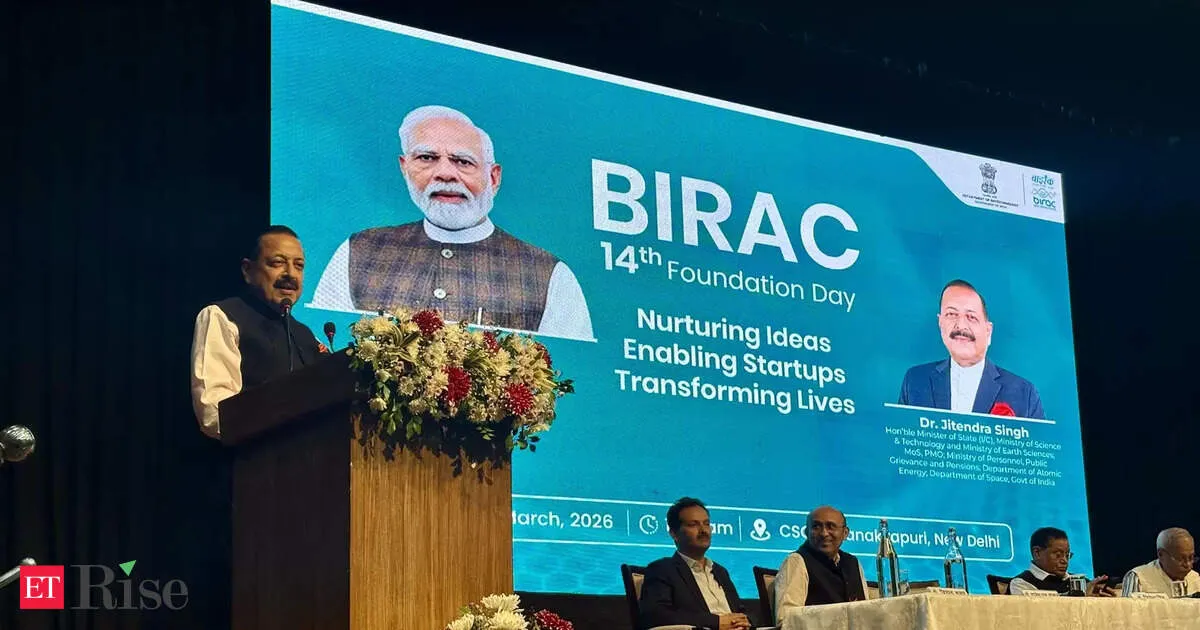
India is rapidly expanding its bioeconomy, rising from roughly $10 billion in 2014 to more than $195 billion in 2025, according to Jitendra Singh. The government’s direction points to reaching a $300-billion milestone by 2030, highlighting momentum in biotech, research, and bio-based industries as policymakers aim to scale impact.
Swipe through stories, personalise your feed, and save articles for later — all on the app.