Australian shares ended little changed on Friday, finishing a volatile week where investors weighed a federal budget proposal to curb negative gearing. The change raised fears of weaker mortgage demand, clouding banks’ outlook even as financials gained 1% after earlier losses. Real estate stocks rose on expectations that first-home buyer support could offset the impact. Outside Australia, investors tracked US China talks and Middle East tensions, while miners slipped 3.1% on softer iron ore and copper prices.
A U S bank disclosed a security lapse after customer data was shared with an AI application the bank says was unauthorized. The incident raises fresh concerns about third-party tools, internal access controls, and how quickly financial institutions can prevent sensitive information from reaching unapproved software. Regulators and customers will want details on what data was exposed and for how long.
Your news, in seconds
Get the Beige app — every story in 60 words, updated hourly. Free on iOS & Android.
US top banks are scrambling to patch IT vulnerabilities flagged by Anthropic’s Mythos AI tool. The system reportedly finds a broad set of security gaps, prompting urgent repairs and software upgrades. Anthropic’s findings are also being shared with smaller banks, speeding the cycle of fixes—though the rapid changes could temporarily disrupt customer services.
The Centre is expected to issue a rectification order within 48 to 72 hours to reinstate the gold import tax exemption for banks. Industry body IBJA says the benefit was accidentally withdrawn through a notification, triggering an IGST-related disruption. Shipments have resumed as the government works to correct the error and restore the earlier relief.
A paper by the Economic Advisory Council to the Prime Minister recommends revising priority sector lending. Instead of optimising mainly for economic efficiency, it argues the system should better serve social equity. The proposal also suggests removing outdated categories, aiming to reduce rigidity and give banks more flexibility in meeting priority targets.
Australian stocks rebounded strongly, led by banks and miners, as improved U.S.-Iran relations lifted global risk sentiment. The benchmark index climbed to its highest close in months. Financial shares gained momentum after the Reserve Bank of Australia’s rate hike, while miners rose on firmer metal prices and signs of revived Chinese demand.
Never miss a story
Set alerts for the topics and sources you care about. Download Beige for free.
SEBI chairman said banks and insurance companies will not be allowed to invest in commodity derivatives. The regulator had earlier discussed allowing pension funds to trade commodities, but that decision has not been disclosed. The stance immediately hit sentiment, with shares of the Multi Commodity Exchange of India falling after the development.
RBI’s proposed move to an expected credit loss (ECL) framework may trigger a one-time net impact of as much as 120 basis points on banks’ Common Equity Tier-1 (CET-1) ratios, according to Crisil Ratings. While the ratio hit could be steep, Crisil expects lenders’ overall credit profiles to remain stable.
Indian banks have stopped gold and silver imports since April 1, citing a pending annual government notification that is supposed to clarify IGST treatment for bullion trade. The issue is expected to carry into FY27 as the renewed Finmin notification hangs fire, tightening supply and adding uncertainty for jewellers and traders relying on imports.
Financial Services Secretary M Nagaraju urged banks to adopt the RBI’s MuleHunter AI tool to tackle financial cyber fraud and mule accounts. The meeting reviewed rising digital fraud trends and stressed tighter coordination between law enforcement and banks, including real-time intelligence sharing, to detect suspicious activity faster and better protect customers.
Reading on mobile?
Open Beige in the app for a smoother experience — free on iOS and Android.
The RBI has issued reporting instructions requiring authorised dealer category I banks to report overseas rupee OTC derivative contracts to CCIL. The move is designed to improve transparency and oversight in the derivatives market by strengthening the availability of trade data. Banks are expected to follow the new directions as part of the regulator’s broader market monitoring efforts.
Crisil Ratings says Indian banks should keep asset quality largely stable, with gross NPAs expected to remain between 2.0% and 2.2% by March 2027. That would be only slightly above the projected historic low of 2.0% in March 2026. Resilience is driven by stronger corporate balance sheets, while MSMEs face pressure amid the West Asia conflict.
Indian banks have largely unwound their net open foreign exchange positions ahead of an RBI deadline, shrinking aggregate exposure from about $40 billion to roughly $4–7 billion. The regulatory-driven exit is expected to keep pressure on the rupee, with traders eyeing a 93/$ to 94.50/$ band and a depreciating bias.
RBI’s new $100 million cap on banks’ net open rupee exposure pushed traders to unwind overseas hedges on Monday. The scramble widened the spread between local and offshore rupee rates, sending the NDF premium higher. Treasury officials warn banks could face sizable mark-to-market losses as they rush to meet the tighter rule.
Follow your favourite sources
Track sources, tags and categories — all in the Beige app.
Banks have asked the Reserve Bank of India to clarify forward contract rules for forex hedging. They warn that RBI steps designed to curb speculation may unintentionally restrict genuine trade hedges. Corporates, meanwhile, are struggling with payment delays and slower cargo timelines amid ongoing global conflicts, prompting industry groups to escalate concerns to the regulator.
Tamil Nadu goes to the polls on April 23, 2026 for the Legislative Assembly elections, and the day is marked as a public holiday affecting businesses. The article breaks down whether banks are open or closed on election day and notes that results are expected on May 4, 2026.
The RBI removed fresh restrictions on Indian rupee non-deliverable forwards, but multiple sources say banks are still not rolling them out to clients. The original curbs were imposed after the rupee hit a record low and were lifted this week. Banks are allegedly avoiding trades citing regulatory risk, slowing access to a key hedging tool.
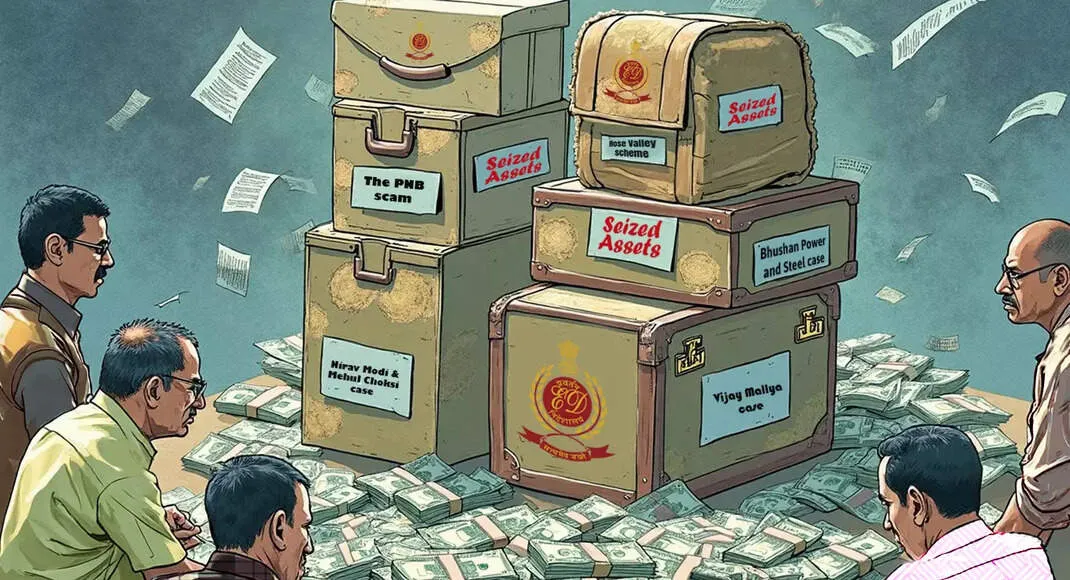
Enforcement Directorate (ED) is now placing greater weight on compensating scam victims, signaling a shift in how financial enforcement delivers justice. The change is being framed as both an evolution of the agency’s role and a way to strengthen public confidence in India’s financial system, with banks reportedly welcoming the direction and scale of support.
Stay informed on the go
Bite-sized news from 100+ trusted sources, right in your pocket.
Banks that traditionally relied on deposits and wholesale funding to drive lending are increasingly parking money in mutual funds. The move helps manage returns and liquidity but also puts banks in direct competition for investors’ savings, where mutual fund investments can replace or reduce demand for bank deposits and loans. The result: a reshaped financial landscape.
Swipe through stories, personalise your feed, and save articles for later — all on the app.