Cerebras’ Nasdaq debut sent its shares nearly doubling and pushed the AI-chip maker past a $100 billion market cap in hours. The win follows a turnaround from earlier customer-concentration concerns to new cloud-and-partnership momentum with OpenAI and AWS, as the company pivots toward inference capacity sold as a service.
Saudi AI firm Humain is deepening its ties with Amazon Web Services, unveiling Humain One, a generative AI enterprise operating system. The initiative positions Humain One as a platform approach to deploy and manage enterprise AI workloads, using AWS infrastructure and services as the foundation for scaling applications and capabilities.
Your news, in seconds
Get the Beige app — every story in 60 words, updated hourly. Free on iOS & Android.
The Pentagon has signed deals with Nvidia, Microsoft, and AWS to deploy AI across classified networks, stepping up efforts to diversify its AI vendor exposure. The move follows a contentious dispute with Anthropic over usage terms for the company’s AI models, pushing DoD to reduce reliance on any single provider while scaling secure deployments.
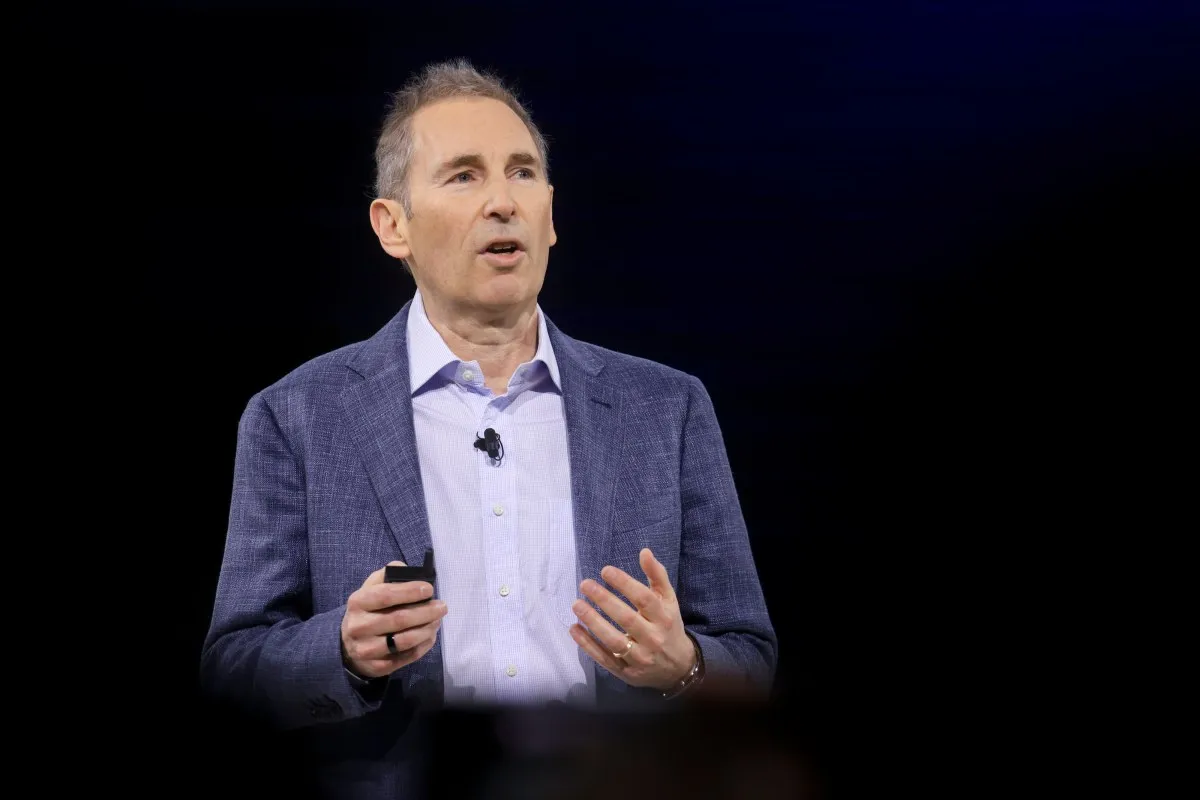
Amazon says it will recruit 11,000 software engineers, interns, and developers in 2026 even after cutting about 30,000 jobs in 2025 and early 2026. AWS CEO Matt Garman frames it as a workforce rebalancing driven by AI demand, arguing roles are shifting toward systems integration and faster AI-assisted problem solving rather than disappearing.
AWS used its “What’s Next with AWS” event to pull OpenAI’s frontier models into Amazon Bedrock, alongside Bedrock Managed Agents, a desktop productivity tool called Amazon Quick Desktop, and an expanded Amazon Connect built for agentic workflows. The timing—24 hours after OpenAI and Microsoft scrapped core API exclusivity—reshapes the cloud AI market, shifting competition to platforms that can securely govern autonomous agents.
AWS Quick has expanded into a desktop-native agent that maintains a persistent personal knowledge graph built from local files and connected SaaS apps. Instead of waiting for prompts, it can proactively suggest and execute actions using learned context—potentially creating “shadow orchestration” beyond what enterprise control planes can fully observe.
Never miss a story
Set alerts for the topics and sources you care about. Download Beige for free.
Amazon says generative AI infrastructure and its cloud engine are driving results, with net profit rising 77% to $30.3 billion. AWS grew 28% to $37.6 billion and funds other bets. In India, Amazon Now is expanding rapidly, with orders up 25% month over month and Prime members tripling shopping frequency after adopting it.
Amazon says its AWS cloud business is bringing in more money than expected, signaling strong momentum in the segment. But the company’s CEO also warned that heavy capital spending will continue for the near term, even as profits rise. The result: investors may see upside from AWS alongside costs needed to support growth.
Amazon Web Services outperformed Wall Street’s cloud forecasts, powered by rising enterprise spending on AI adoption. AWS revenue grew strongly as Amazon deepened AI partnerships and expanded infrastructure. Yet the stock fell after a weaker-than-expected outlook for the coming quarter’s operating income, highlighting how heavy AI investments may weigh on near-term profits before monetization arrives.
Amazon has announced large-scale layoffs affecting tens of thousands while simultaneously planning to hire around 11,000 software developers and interns in 2026. AWS CEO Matt Garman says AI isn’t replacing people, arguing it automates repetitive tasks so developers can shift to more complex work and move faster. The timing raises the bigger question: who is being changed, and how?
Reading on mobile?
Open Beige in the app for a smoother experience — free on iOS and Android.
A day after OpenAI won an agreement with Microsoft to end exclusive rights, AWS moved fast. The cloud giant announced a new slate of OpenAI offerings on AWS, including upgraded model options and a new agent service. The timing suggests a rapid push to broaden access and capture demand as the exclusivity era unwinds.
Microsoft and OpenAI have rewritten their deal by scrapping key exclusivity terms. Microsoft will no longer share revenue with OpenAI for models served through Azure, while OpenAI keeps paying Microsoft a capped 20% share until 2030. The biggest shift: OpenAI can sell on any cloud, including AWS and Google Cloud, ending Azure lock-in and defusing a legal showdown tied to Amazon’s $50 billion investment plan.
OpenAI has reached major terms with Microsoft, its largest shareholder, clearing the way for OpenAI products to be sold on AWS. In return, Microsoft gains more cash under an updated revenue share arrangement tied to OpenAI’s sales. The change effectively resolves the legal friction that had threatened execution of the broader $50B Amazon-related direction.
Meta has signed a landmark AWS agreement to deploy tens of millions of Graviton5 CPU cores, positioning it among the biggest users of the chip worldwide. The expansion targets agentic AI workloads like real time reasoning, code generation, and multi step orchestration—supported by Graviton5’s 3nm design and efficiency gains, starting with a rollout already at massive scale.
Follow your favourite sources
Track sources, tags and categories — all in the Beige app.
Enterprises are moving AI agents from experiments to production, and the key question is how to manage them. Google and AWS are taking opposite paths: Google emphasizes a Kubernetes-style control plane for governance and identity, while AWS pushes config-based harnesses in the execution layer for faster deployment. Both aim to reduce new risks like state drift in long-running agents.
An AWS cloud network outage left streaming, messaging, and even some banking services offline for hours on Monday. Reports said customers experienced disruptions across multiple popular platforms, while banks such as Lloyd’s were also impacted and traced the issue back to Amazon Web Services. The incident highlights how deeply everyday online life relies on a single cloud infrastructure provider.
Swiggy is opening its AI commerce infrastructure through Builders Club, a developer programme for external builders, startups, and enterprises. Backed by AWS and powered by Amazon Bedrock and AgentCore, it grants approved teams access to multiple MCP servers and 18+ APIs across Swiggy Food, Instamart, and Dineout. Builders can create AI agents and copilots that take real actions, with invite-led access, rate limits, and engineering support.
Swipe through stories, personalise your feed, and save articles for later — all on the app.